

Role of Subcontractors in Ontario Home Projects
Managing a custom home renovation in Durham Region often means coordinating more than design decisions and budgets. Homeowners depend on subcontractors for specialized tasks like plumbing, electrical work, and HVAC installations, which demand expert training and precise execution. Understanding how subcontractors bring deep expertise to your project helps you make better hiring choices, avoid costly mistakes, and ensure every detail meets Canadian building standards.
Table of Contents
- What A Subcontractor Is In Construction
- Types Of Subcontractors And Specializations
- How Subcontractors Are Selected And Managed
- Legal Framework And Contractual Duties In Ontario
- Risks, Liabilities, And Quality Control For Homeowners
Key Takeaways
| Point | Details |
|---|---|
| Subcontractor Importance | Subcontractors are essential to construction projects, providing specialised skills that enhance quality and efficiency. |
| Selection Criteria | Careful evaluation of subcontractors is crucial, focusing on technical capabilities, past performance, and compliance with industry standards. |
| Management Strategies | Effective management of subcontractors include clear contracts, regular communication, and performance monitoring to ensure project success. |
| Legal Compliance | Adhering to legal obligations in Ontario ensures protection for both subcontractors and homeowners, mitigating risks and clarifying responsibilities. |
What a Subcontractor Is in Construction
In the complex world of construction, subcontractors are specialized professionals who play a critical role in bringing home renovation and building projects to life. Specialty trade professionals are hired by general contractors to perform specific, highly technical tasks that require expert knowledge and precision.
Subcontractors represent a crucial workforce segment in construction, focusing on specific trades and technical skills. They typically specialize in areas that demand extensive training and technical expertise, such as:
- Electrical work
- Plumbing installations
- HVAC system integration
- Roofing
- Concrete pouring
- Carpentry
- Painting and finishing
While general contractors manage overall project coordination, subcontractors bring deep expertise to their specific scope of work. Trade specialists collaborate closely with general contractors to ensure high-quality project completion, adhering to industry standards and technical requirements.
The relationship between general contractors and subcontractors is symbiotic. General contractors rely on these specialized professionals to execute precise, technical aspects of construction projects that require specific skills and certifications. This collaborative approach allows for more efficient project management, reduced risks, and higher-quality outcomes.
Pro tip: When hiring for home renovation projects, always verify a subcontractor’s professional credentials, insurance coverage, and past project references to ensure quality workmanship.
Types of Subcontractors and Specializations
In the residential construction landscape of Ontario, subcontractors represent a diverse array of specialized trade professionals who bring critical technical expertise to home renovation and building projects. Canadian construction trades encompass a wide range of specialized skills that ensure precise, code-compliant work across various technical domains.
The most common types of subcontractors in residential construction include:
- Electrical Subcontractors: Handle complex wiring, electrical systems, and safety installations
- Plumbing Specialists: Manage water supply, drainage, and pipe network configurations
- HVAC Technicians: Design and install heating, ventilation, and air conditioning systems
- Roofing Professionals: Execute roof installations, repairs, and weatherproofing
- Concrete Workers: Perform foundation work, slabs, and structural concrete elements
- Carpentry Experts: Construct framing, custom woodwork, and structural components
- Painting and Finishing Contractors: Provide interior and exterior surface treatments
Each subcontractor brings a unique set of specialized construction skills that are essential for completing complex home renovation projects. Their deep technical knowledge ensures that specific project components meet rigorous industry standards, building codes, and safety requirements.
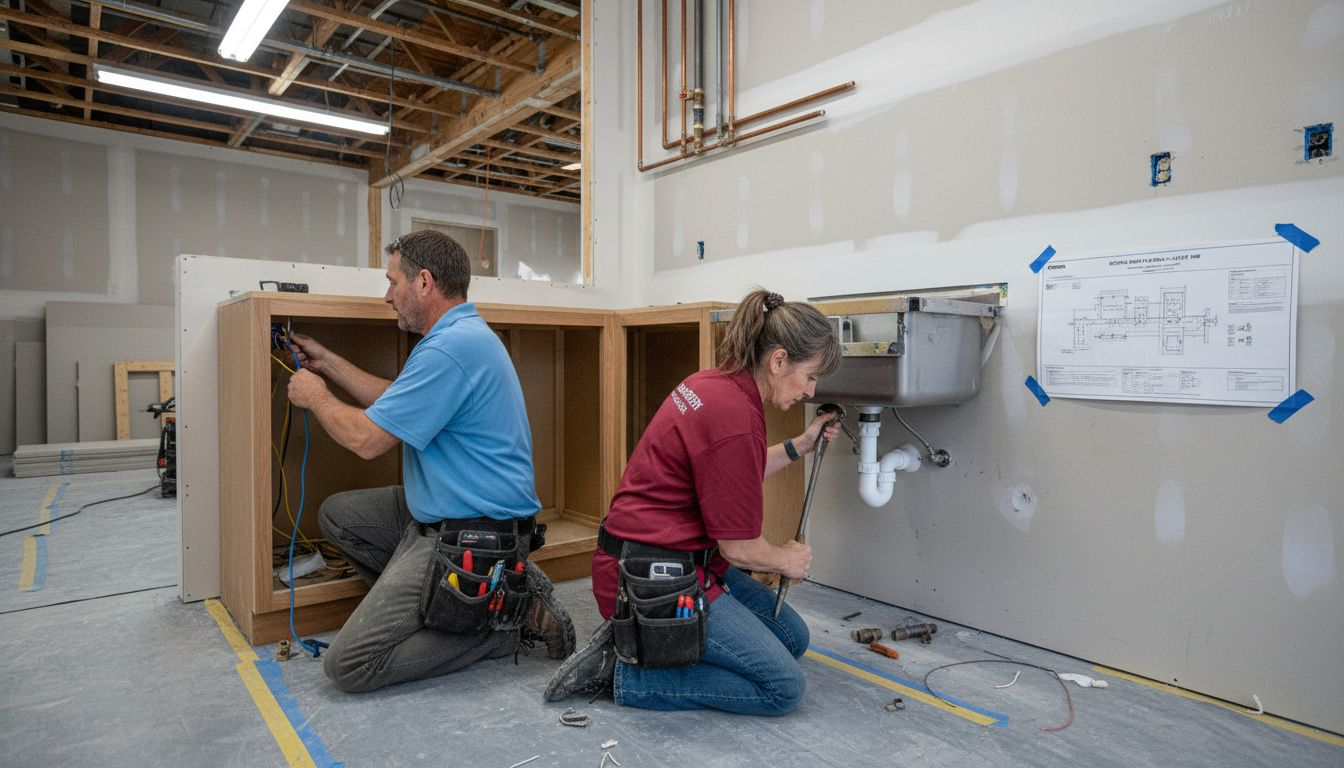
Here’s a summary of common subcontractor specializations and their value for residential projects:
| Subcontractor Type | Role in Construction | Typical Credentials |
|---|---|---|
| Electrician | Installs wiring, ensures safety | Trade certification, licensing |
| Plumber | Manages water systems, drainage | Red Seal, provincial licence |
| HVAC Technician | Designs climate control systems | Technician certificate |
| Roofer | Ensures weatherproof protection | Industry training, insurance |
| Carpenter | Builds structural elements | Apprenticeship, trade licence |
| Painter/Finisher | Enhances aesthetic value | Experience, portfolio |
The expertise of these specialized professionals allows general contractors to manage intricate projects more effectively. By engaging subcontractors with specific certifications and proven track records, construction teams can deliver higher-quality results, reduce potential errors, and maintain efficient project timelines.
Pro tip: When selecting subcontractors, request detailed portfolios, verify professional certifications, and check references to ensure you’re hiring the most qualified specialists for your specific home project needs.
How Subcontractors Are Selected and Managed
Selecting and managing subcontractors is a critical process that requires careful evaluation and strategic coordination in residential construction projects. Prequalification strategies play a crucial role in ensuring that only the most qualified professionals are engaged for specific project components.
The subcontractor selection process typically involves several key evaluation criteria:
- Technical Capabilities: Assessing professional expertise and specialized skills
- Financial Stability: Reviewing business health and capacity to complete projects
- Past Performance: Examining previous project outcomes and client references
- Quality of Work: Evaluating historical work standards and consistency
- Compliance and Certifications: Verifying professional licensing and industry credentials
- Price Competitiveness: Comparing cost structures while maintaining quality standards
- Communication and Collaboration Skills: Assessing ability to work within project teams
Once selected, subcontractor management techniques focus on maintaining clear communication, setting explicit expectations, and continuously monitoring project progress. Effective management involves creating detailed contracts that outline specific scope of work, payment terms, performance expectations, and dispute resolution mechanisms.
Successful subcontractor management requires ongoing engagement and proactive oversight. General contractors must maintain regular communication, conduct periodic performance reviews, and address any emerging challenges promptly to ensure project success. This collaborative approach helps mitigate risks, maintain quality standards, and keep residential construction projects on track.
Pro tip: Always develop a comprehensive written contract that clearly defines project expectations, milestones, payment schedules, and performance standards to prevent potential misunderstandings.
Legal Framework and Contractual Duties in Ontario
In the residential construction landscape of Ontario, legal compliance is paramount for subcontractors and general contractors alike. Construction health and safety regulations establish a comprehensive framework that defines the rights, responsibilities, and legal obligations of all parties involved in construction projects.
Key legal considerations for subcontractors in Ontario include:
- Occupational Health and Safety Act (OHSA) Compliance: Mandatory safety standards and workplace protocols
- Licensing and Certification Requirements: Proving professional qualifications
- Contractual Transparency: Detailed documentation of project scope and expectations
- Payment Protection Mechanisms: Understanding lien rights and payment schedules
- Insurance and Liability Coverage: Maintaining appropriate professional insurance
- Workplace Safety Insurance Board (WSIB) Registration: Mandatory worker protection registration
- Tax and Reporting Obligations: Proper financial documentation and reporting
Ontario Construction Act provisions outline critical legal protections for subcontractors, including statutory rights related to payment, work certification, and dispute resolution. These regulations ensure fair treatment and provide structured mechanisms for addressing potential conflicts between contractors and subcontractors.
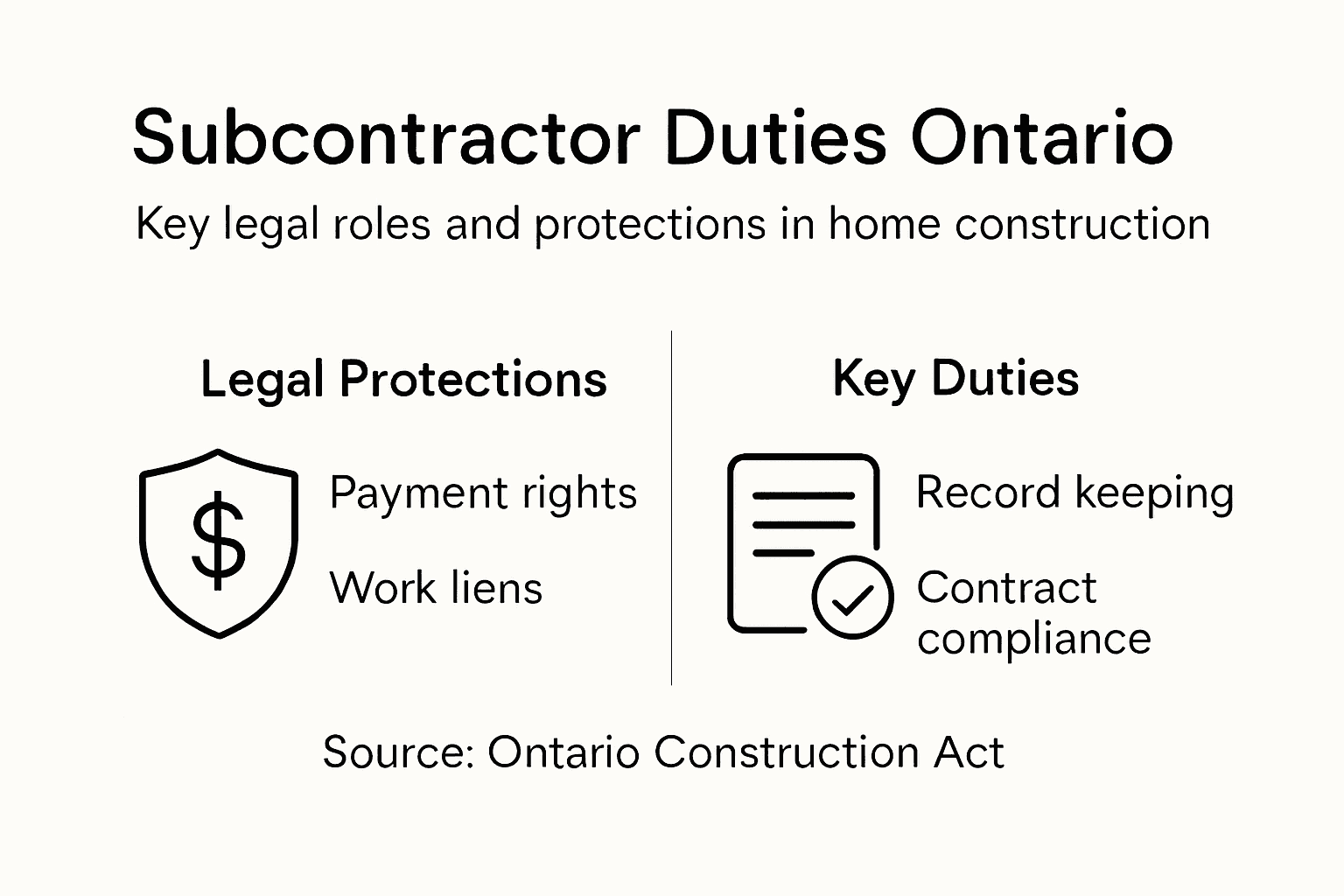
Navigating the legal landscape requires subcontractors to maintain meticulous records, understand their contractual obligations, and proactively communicate with general contractors. By adhering to provincial regulations and maintaining professional standards, subcontractors can protect their interests and contribute to successful residential construction projects.
Compare key aspects of subcontractor management versus legal compliance in Ontario:
| Aspect | Management Approach | Legal Compliance |
|---|---|---|
| Oversight | Direct monitoring, regular reviews | Adherence to codes and regulations |
| Documentation | Detailed contracts, scope definition | Mandatory licences, registrations |
| Risk Mitigation | Performance benchmarks, site checks | Insurance, WSIB participation |
| Dispute Handling | Contract clauses, communication | Statutory rights, legal processes |
Pro tip: Consult with a legal professional specializing in construction law to thoroughly understand your rights, obligations, and potential liability risks before signing any contract.
Risks, Liabilities, and Quality Control for Homeowners
Homeowners undertaking residential construction projects must navigate a complex landscape of potential risks and liabilities that can significantly impact their investment. Contractor negligence risks represent a critical area of concern that demands careful consideration and proactive management.
Key risk management strategies for homeowners include:
- Credential Verification: Thoroughly check subcontractor professional licenses and certifications
- Insurance Validation: Confirm comprehensive liability and worker’s compensation coverage
- Contract Clarity: Develop detailed contracts with explicit quality standards and remediation clauses
- Performance Benchmarks: Establish clear, measurable work quality expectations
- Regular Inspections: Conduct periodic site reviews and progress assessments
- Documentation: Maintain comprehensive records of all project communications and agreements
- Dispute Resolution: Include specific mechanisms for addressing potential conflicts
Indemnity and liability provisions play a crucial role in allocating potential financial risks between homeowners, general contractors, and subcontractors. Understanding these legal mechanisms helps protect homeowners from unexpected financial exposure and ensures clear accountability throughout the construction process.
Successful risk management requires a proactive approach that combines legal sophistication, technical understanding, and ongoing communication. Homeowners must remain engaged, ask critical questions, and maintain a collaborative yet vigilant relationship with their contractors to mitigate potential challenges and ensure project success.
Pro tip: Always engage an independent legal professional to review construction contracts before signing, ensuring comprehensive protection of your interests and a clear understanding of potential liability scenarios.
Trust Experienced Subcontractors for Your Ontario Home Project
Managing the many challenges in residential construction starts with selecting skilled and reliable subcontractors who fully understand Ontario’s legal requirements and quality standards. From electrical work to custom carpentry, Henley Contracting partners with experienced trade professionals to deliver craftsmanship that homeowners in Durham and beyond can trust. Our deep local knowledge ensures your project meets all technical needs while keeping you informed and confident throughout the process.

Ready to build with confidence? Explore our range of Custom Build services that bring expert subcontractor coordination and superior workmanship to your doorstep. Visit Henley Contracting today to start your home renovation or new build with trusted professionals by your side.
Frequently Asked Questions
What is a subcontractor in the context of home construction projects?
A subcontractor is a specialized professional hired by a general contractor to perform specific tasks in a construction project, such as electrical work, plumbing, or roofing, requiring expert knowledge and precision.
How are subcontractors selected for home renovation projects?
Subcontractors are typically selected based on several evaluation criteria, including their technical capabilities, financial stability, past performance, quality of work, compliance with certifications, and price competitiveness.
What are the most common types of subcontractors in residential construction?
Common types of subcontractors include electricians, plumbers, HVAC technicians, roofers, concrete workers, carpenters, and painting contractors. Each specializes in different technical aspects essential for the project.
What legal obligations do subcontractors have in Ontario residential projects?
Subcontractors in Ontario must comply with various legal obligations including safety regulations, licensing and certification requirements, insurance coverage, and adherence to the Ontario Construction Act, which outlines rights related to payment and dispute resolution.