

Renovation Budgeting Process for Homeowners in Canada
Taking on a renovation in Durham Region can feel daunting when you want quality results without overspending. Planning is your strongest ally, especially as recent fluctuations in material costs and seasonal pricing add new layers of complexity for Ontario homeowners. If you want to maximize comfort and value while avoiding budget overruns, starting with a careful project assessment and clear financial plan is key to smarter, stress-free remodeling.
Table of Contents
- Step 1: Assess Project Scope And Needs
- Step 2: Research Local Renovation Costs
- Step 3: Set A Realistic Renovation Budget
- Step 4: Allocate Funds For Contingencies
- Step 5: Review And Verify Budget Accuracy
Quick Summary
| Main Insight | Detailed Explanation |
|---|---|
| 1. Assess renovation goals first | Clearly outline your renovation desires, focusing on both personal enjoyment and potential property value increase. |
| 2. Research local renovation costs | Gather detailed costs from multiple sources to create a realistic budget based on current local pricing trends. |
| 3. Allocate a contingency fund | Set aside 10-20% of your total budget to cover unexpected expenses that can arise during the renovation process. |
| 4. Maintain budget accuracy | Regularly review spending against estimates to catch discrepancies early and adjust the financial plan accordingly. |
Step 1: Assess project scope and needs
Before diving into your home renovation, you need to develop a clear and comprehensive understanding of what you want to achieve. Taking time to carefully assess your project’s scope will save you significant headaches and unexpected expenses down the road.
Start by creating a detailed inventory of your renovation goals. Home renovation priorities typically include:
- Improving home comfort and functionality
- Updating aesthetic design elements
- Addressing structural or system issues
- Increasing property value
- Enhancing energy efficiency
Your assessment should involve a systematic evaluation of your current space. Walk through each area you plan to renovate and document specific changes you want to make. Consider consulting recent home inspection reports to identify potential underlying problems that might need addressing before cosmetic upgrades.
Prioritizing your renovation work requires strategic thinking. Renovation planning experts recommend focusing first on critical structural and system improvements before pursuing aesthetic modifications. This approach ensures your home remains safe and functional while preventing costly future repairs.
Key insight: Your renovation goals should balance personal preferences with potential return on investment for your specific neighbourhood.
Pro tip: Create a detailed spreadsheet tracking each renovation goal, estimated costs, and potential impact on your home’s functionality and value.

Step 2: Research local renovation costs
Understanding the financial landscape of home renovations is crucial for developing a realistic budget. Your goal in this step is to gather comprehensive information about current renovation pricing in your specific region, which will help you make informed decisions about your project.
Start by investigating regional cost variations. Residential renovation pricing across Canada can differ significantly between provinces, with material costs and labour rates fluctuating based on local economic conditions. Some key research methods include:
- Consulting local contractor associations
- Reviewing recent Statistics Canada renovation price indexes
- Checking online renovation cost estimator tools
- Requesting quotes from multiple contractors in your area
- Examining recent neighbourhood renovation projects
When researching costs, pay special attention to factors that can impact your budget. Material prices for steel, aluminium, and other construction supplies can change rapidly, potentially affecting your overall project expenses. Consider seasonal variations in renovation pricing, as labour and material costs might be more competitive during off-peak periods.
A strategic approach to cost research can save you thousands of dollars in unexpected expenses.
Pro tip: Create a detailed spreadsheet comparing quotes from at least three different contractors to identify fair market rates and potential cost-saving opportunities.
Step 3: Set a realistic renovation budget
Creating a comprehensive budget is the financial backbone of your home renovation project. Your goal is to develop a clear financial roadmap that balances your renovation aspirations with practical economic constraints while avoiding unexpected financial stress.
Home renovation budgeting requires strategic planning and a systematic approach to financial management. Begin by establishing your renovation priorities and allocating funds accordingly:
- Urgent structural repairs and system upgrades
- Essential functional improvements
- Aesthetic enhancements
- Decorative finishing touches
Prioritize projects that offer the highest return on investment, such as kitchen and bathroom renovations. These areas typically provide the most significant value increase for your home. When allocating your budget, always include a contingency fund of approximately 20% to cover unexpected expenses that inevitably arise during renovation projects.
Your renovation budget should reflect a balance between your vision and financial reality, with flexibility for unforeseen challenges.
Consider exploring various financing options, including personal savings, home equity lines of credit, or renovation-specific loans. Some provinces offer subsidies or grants for energy-efficient upgrades, which could help offset your total project costs.
Here’s a quick comparison of common home renovation financing options:
| Financing Method | Typical Features | Best For |
|---|---|---|
| Personal Savings | No interest, flexible | Smaller or phased projects |
| Home Equity Line of Credit | Lower rates, large sums | Major renovations, long term |
| Renovation-Specific Loan | Set term, fixed payments | Mid-size renovations |
| Government Grants | Often rebate-based | Energy efficiency upgrades |
| Credit Card | High interest, easy use | Minor purchases or emergencies |
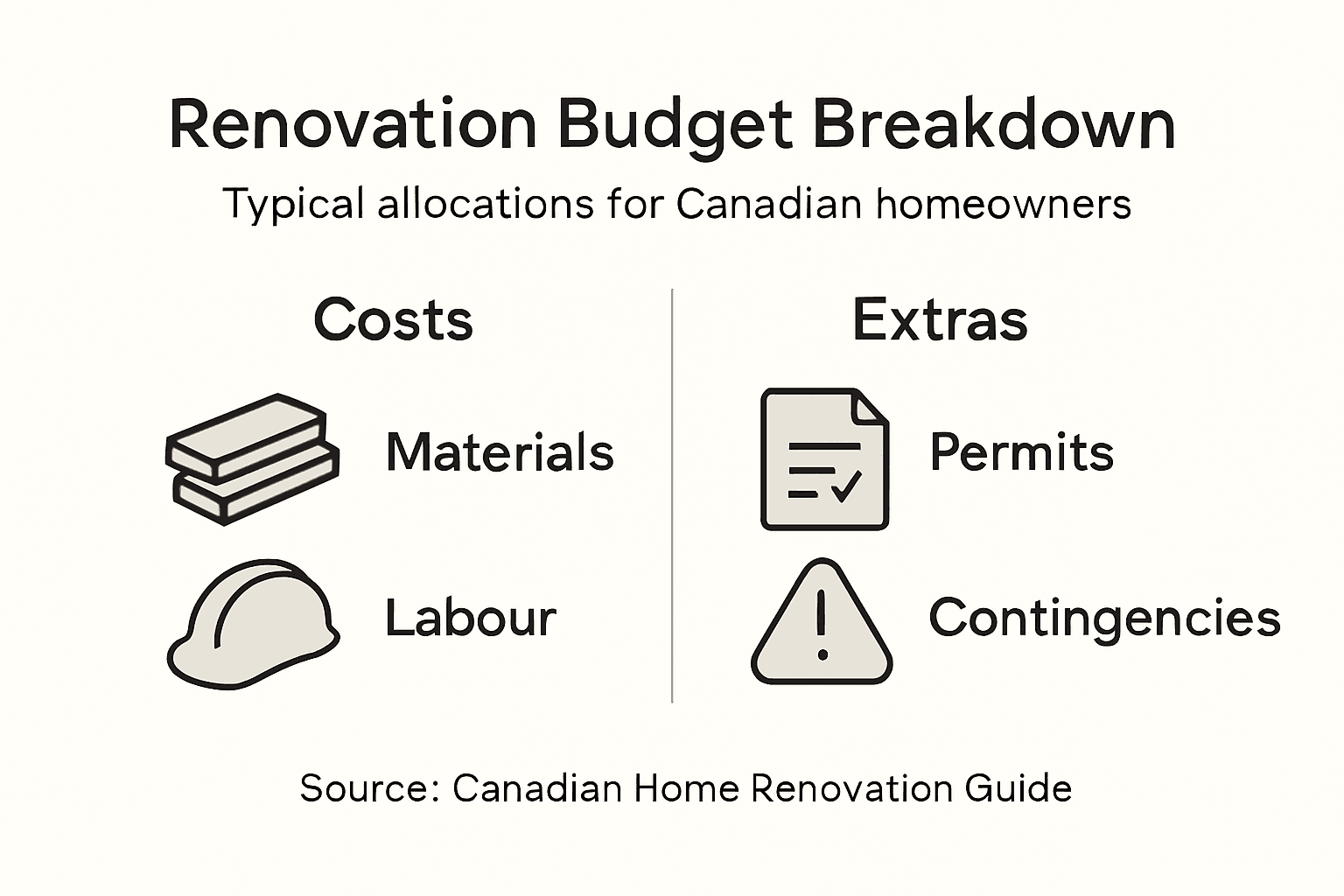
Pro tip: Break down your total budget into percentage allocations for materials, labour, permits, and contingencies to maintain precise financial control throughout your renovation.
Step 4: Allocate funds for contingencies
Planning for unexpected expenses is a critical component of any successful home renovation project. Your goal is to establish a financial safety net that will help you navigate potential surprises without derailing your entire renovation budget.
Renovation project contingency planning involves setting aside funds to address unforeseen issues that may emerge during the construction process. Financial experts recommend allocating approximately 10-20% of your total budget specifically for unexpected costs:
- Structural surprises discovered during demolition
- Potential code compliance upgrades
- Materials price fluctuations
- Unexpected repair requirements
- Equipment or labour replacement needs
When determining your contingency fund strategy, consider the complexity and age of your home. Older properties or more extensive renovations typically require a larger buffer. Documenting potential risks in advance can help you more accurately estimate the amount needed for unexpected expenses.
Contingency funds are not an extra expense, but a strategic financial protection mechanism for your renovation investment.
Explore various financing options that can support your contingency planning, such as home equity lines of credit or personal savings accounts. Some financial institutions offer specific renovation loan products that include built-in contingency provisions.
Pro tip: Keep your contingency funds liquid and easily accessible, but separate from your primary renovation budget to maintain clear financial boundaries.
Step 5: Review and verify budget accuracy
Ensuring your renovation budget remains precise and realistic requires ongoing attention and strategic verification. Your goal is to create a financial roadmap that remains flexible yet disciplined throughout the renovation process.
Renovation budget verification involves a systematic approach to tracking and validating your financial plan. Implement these critical strategies for maintaining budget integrity:
- Collect detailed quotes from multiple contractors
- Compare line-item expenses against initial estimates
- Track actual spending against projected costs
- Document every financial adjustment
- Schedule regular budget review meetings
When reviewing your budget, pay close attention to potential variances. Small discrepancies can quickly compound into significant overruns if left unchecked. Maintain meticulous financial documentation to understand exactly where your money is being allocated throughout the renovation.
The table below summarizes the key steps for maintaining renovation budget accuracy:
| Step | Main Action | Outcome Achieved |
|---|---|---|
| Collect Quotes | Gather detailed contractor bids | Realistic cost estimates |
| Track Actual vs. Projected | Monitor expenses regularly | Early detection of overruns |
| Review & Adjust | Schedule frequent checks | Improved financial control |
| Document Changes | Record all budget updates | Clear spending history |
Budget accuracy is not about perfection, but about maintaining financial awareness and control.
Consider engaging a financial advisor or renovation specialist who can provide an independent perspective on your budget. They can help identify potential cost-saving opportunities and highlight areas where you might be overestimating or underestimating expenses.
Pro tip: Use digital spreadsheet tools with real-time tracking and automatic calculation features to simplify your budget verification process and provide instant financial insights.
Take Control of Your Renovation Budget with Trusted Local Expertise
Careful budgeting and contingency planning are essential steps to avoid financial surprises when renovating your home. The detailed process of assessing costs, gathering accurate quotes, and safeguarding your budget with contingency funds can feel overwhelming. At Henley Contracting, we understand the challenges Canadian homeowners face in balancing renovation goals with realistic budgets while maintaining quality and trust.

Discover how our experienced team can help you navigate your entire renovation journey with transparency and expertise. Whether you need support refining your renovation plan or professional craftsmanship to bring your vision to life, explore our Renovations – Henley Contracting Ltd. services. Don’t wait until unexpected costs arise—contact us today at Henley Contracting Ltd. and take the first confident step toward a renovation that meets both your functional needs and budget expectations. Visit our landing page to get personalized advice tailored for homeowners in Durham, Kawartha Lakes, and beyond.
Frequently Asked Questions
How do I assess the scope of my home renovation project?
Start by creating a detailed inventory of your renovation goals, focusing on critical areas like comfort, functionality, and aesthetic upgrades. Walk through your space and document specific changes you want to make, aiming to complete this assessment within a week.
What factors should I consider when researching local renovation costs?
Consider materials, labour rates, and regional economic conditions as they can significantly affect your total expenses. Gather quotes from at least three contractors in your area and compile recent data regarding renovation pricing to gain a comprehensive understanding within 30 days.
How should I set a realistic budget for my renovation?
Establish a budget by prioritizing urgent repairs and necessary upgrades while allowing for aesthetic changes later. Include a contingency fund of about 20% of your total budget to cover unforeseen costs, and allocate your funds accordingly to ensure financial stability throughout the project.
Why is it important to allocate funds for contingencies in my renovation budget?
Allocating funds for contingencies—typically 10-20% of your total budget—helps you address unexpected issues like structural surprises or compliance upgrades without derailing your renovation. Make this part of your initial budget planning to safeguard your financial investment.
How can I ensure the accuracy of my renovation budget throughout the project?
Maintain budget accuracy by regularly tracking your expenses against initial estimates and documenting any changes made. Conduct frequent budget reviews, ideally on a weekly basis, to identify discrepancies before they compound into significant overruns, ensuring your financial roadmap remains intact.
What financing options are available for homeowners undergoing renovations?
Explore financing options such as personal savings, home equity lines of credit, or renovation-specific loans, which can help cover costs effectively. Research potential provincial subsidies for energy-efficient upgrades as well to enhance your financing strategy.
Recommended
- 7 Types of Residential Renovations Every Homeowner Should Know
- Bathroom Renovation: Impact on Home Comfort and Value
- 7 Home Renovation Budgeting Tips Every Ontario Homeowner Needs
- Why Plan Renovations: Ensuring Value and Compliance
- Energieaudit Erklärung – Mehr Effizienz und Kostenersparnis – Elektrotechnik Ernst
- Calgary Junk Removal Services | Eco-Friendly & Efficient