

Pre-Construction Planning – Why It Matters for Durham Homeowners
Starting a custom build or renovation in the Durham Region can quickly become overwhelming when you realize how many moving parts unfold before the first wall goes up. A solid understanding of pre-construction planning empowers homeowners to set clear project goals, avoid expensive setbacks, and build strong relationships with reputable contractors. This guide breaks down the Canadian approach to pre-construction, giving you the insights needed for a confident and well-organized project launch.
Table of Contents
- Defining Pre-Construction Planning In Canada
- Key Stages Of The Pre-Construction Process
- Types Of Residential Pre-Construction Projects
- Legal Requirements And Regulatory Standards
- Roles And Responsibilities Of Project Stakeholders
- Risks, Costs, And Common Planning Mistakes
Key Takeaways
| Point | Details |
|---|---|
| Importance of Pre-Construction Planning | Pre-construction planning is essential for determining project success by establishing a comprehensive framework for construction projects in Canada. |
| Key Stages to Follow | Homeowners should engage in critical stages such as site analysis, budget development, and regulatory compliance to ensure robust project execution. |
| Understanding Stakeholder Roles | Clear definition of stakeholder responsibilities is vital for smooth communication and collaboration during the pre-construction phase. |
| Mitigating Risks and Costs | Proactive risk assessment and budget allocation for pre-construction can significantly reduce financial and operational challenges during construction. |
Defining pre-construction planning in Canada
Pre-construction planning represents a critical preliminary phase in Canadian residential construction, where comprehensive groundwork determines project success. Pre-construction activities establish the foundational framework for any building project, ensuring strategic alignment before physical construction begins.
In the Canadian context, pre-construction planning encompasses several essential components:
- Project conceptualization and initial design development
- Comprehensive feasibility studies
- Site assessment and selection
- Regulatory permit procurement
- Financial planning and budget development
- Stakeholder coordination and communication strategies
The primary objective of this phase is to mitigate potential risks and create a structured roadmap for successful project execution. Detailed pre-construction analysis helps homeowners and contractors anticipate challenges, optimize resource allocation, and establish clear project parameters.
Understanding these planning dynamics allows Durham homeowners to approach construction projects with confidence, knowing that rigorous preliminary assessments form the backbone of their building venture. The process transforms abstract concepts into actionable design strategies, bridging imagination and practical implementation.
Pro tip: Document every discussion, decision, and design iteration during pre-construction to create a comprehensive project reference that can prevent misunderstandings later.
Key stages of the pre-construction process
The pre-construction process represents a strategic journey that transforms initial project ideas into actionable building plans for Durham homeowners. Residential construction planning involves multiple interconnected stages that require careful coordination and professional expertise.
Key stages of the pre-construction process typically include:
- Project initiation and preliminary concept development
- Comprehensive site analysis and feasibility assessment
- Architectural and engineering design preparation
- Budget development and financial planning
- Regulatory permit and approval processes
- Contractor selection and initial contract negotiations
Each stage requires meticulous attention to detail and strategic decision-making. Homeowners must work closely with professionals to navigate complex requirements, assess potential challenges, and develop a robust implementation strategy that aligns with their vision and budgetary constraints.
Successful pre-construction planning demands a systematic approach that balances creative design aspirations with practical considerations. By understanding and carefully executing these stages, Durham homeowners can significantly reduce project risks, control costs, and create a solid foundation for their construction endeavour.
Pro tip: Maintain a detailed digital folder with all project documents, communications, and design iterations to ensure smooth information tracking throughout the pre-construction process.
Types of residential pre-construction projects
Residential pre-construction projects in the Durham Region encompass a diverse range of building types, each with unique planning requirements and strategic considerations. Residential development types vary significantly, demanding tailored approaches to ensure successful project execution.
The primary residential pre-construction project types include:
- Single-family detached homes
- Townhouse developments
- Multi-unit residential buildings
- Condominium complexes
- Custom home renovations
- Mixed-use residential and commercial spaces
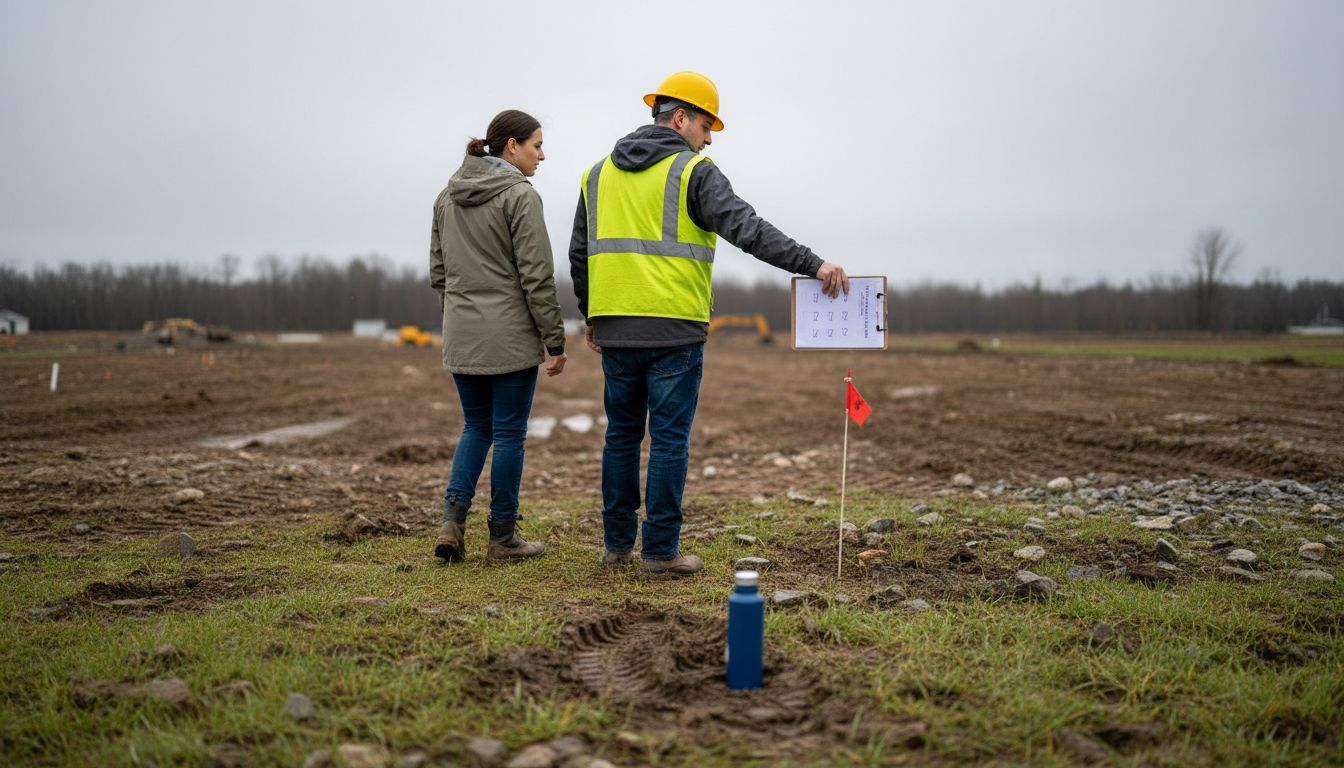
Each project type requires specific pre-construction planning strategies. Single-family homes demand detailed site assessments and individualized design considerations, while multi-unit developments necessitate more complex zoning approvals, financial modeling, and stakeholder coordination.
Here’s a quick comparison of typical residential pre-construction project types and their unique planning challenges:
| Project Type | Unique Planning Challenge | Preferred Strategy |
|---|---|---|
| Single-family home | Detailed zoning compliance | Custom site study |
| Townhouse development | Shared infrastructure coordination | Cooperative stakeholder meetings |
| Multi-unit residential | Complex permit requirements | Early engagement with authorities |
| Condominium complex | Extensive financial modelling | Professional budget management |
| Custom home renovation | Integrating old and new designs | Phased design consultation |
| Mixed-use residential/commercial | Balancing diverse occupancy standards | Hybrid regulatory approval process |
Pre-construction planning adapts to the unique challenges of each residential project type, ensuring compliance, feasibility, and strategic alignment with homeowner objectives.
Understanding the nuanced requirements of different residential project types allows Durham homeowners to approach their construction journey with informed confidence. Pre-construction residential variations highlight the importance of specialized planning that addresses the specific characteristics of each development category.
Pro tip: Consult with local contractors who specialize in your specific project type to gain insights into unique pre-construction planning requirements and potential challenges.
Legal requirements and regulatory standards
Navigating the complex landscape of legal requirements and regulatory standards is a critical aspect of pre-construction planning in the Durham Region. Development approval processes demand meticulous attention to municipal, provincial, and federal regulations that govern residential construction projects.
Key regulatory compliance areas include:
- Zoning by-law requirements
- Building code standards
- Environmental assessment regulations
- Land-use restrictions
- Site plan approval processes
- Fire safety and building safety regulations
- Accessibility compliance standards
The regulatory landscape requires comprehensive documentation and proactive engagement with local authorities. Homeowners must obtain multiple approvals, including:
- Municipal building permits
- Zoning compliance certificates
- Environmental impact assessments
- Structural engineering approvals
- Utility connection authorizations
Successful pre-construction planning hinges on understanding and meticulously addressing all legal and regulatory requirements before breaking ground.
Regulatory compliance strategies are essential for preventing costly delays and potential legal complications. Early consultation with local authorities and professional consultants can streamline the approval process and ensure that your residential project meets all necessary legal standards.
Pro tip: Engage a local permit expediter or consultant who understands the specific regulatory landscape of the Durham Region to navigate complex approval processes more efficiently.
Roles and responsibilities of project stakeholders
Successful pre-construction planning hinges on clear understanding and collaboration among various project stakeholders. Project stakeholder roles are complex and interdependent, requiring precise definition of responsibilities to ensure smooth project progression.
Key stakeholders in residential construction projects include:
- Homeowners/Clients
- Project vision and financing
- Final decision-making authority
- Architects
- Design conceptualization
- Technical drawings and specifications
- Engineers
- Structural and systems planning
- Technical feasibility assessments
- Contractors
- Construction logistics
- Project implementation
- Regulatory Authorities
- Compliance verification
- Permit and approval processes
Pre-construction meeting protocols establish critical communication channels that define each stakeholder’s specific duties and expectations. This initial coordination prevents misunderstandings and potential conflicts during the construction phase.
Effective stakeholder management transforms individual contributions into a cohesive, goal-oriented project strategy.
Each stakeholder brings unique expertise and perspective, creating a collaborative ecosystem that transforms project concepts into tangible residential spaces. Understanding these interdependent roles is crucial for Durham homeowners seeking successful construction outcomes.
Pro tip: Schedule a comprehensive pre-construction meeting with all key stakeholders to explicitly document roles, communication protocols, and project expectations.
Risks, costs, and common planning mistakes
Pre-construction planning involves navigating a complex landscape of potential challenges that can significantly impact project success. Pre-project planning research reveals that inadequate preparation often leads to substantial financial and operational risks for homeowners.
Common pre-construction planning mistakes include:
- Insufficient scope definition
- Unrealistic budget estimations
- Poor stakeholder communication
- Inadequate risk assessment
- Overlooking regulatory compliance
- Underestimating project complexity
- Neglecting contingency planning
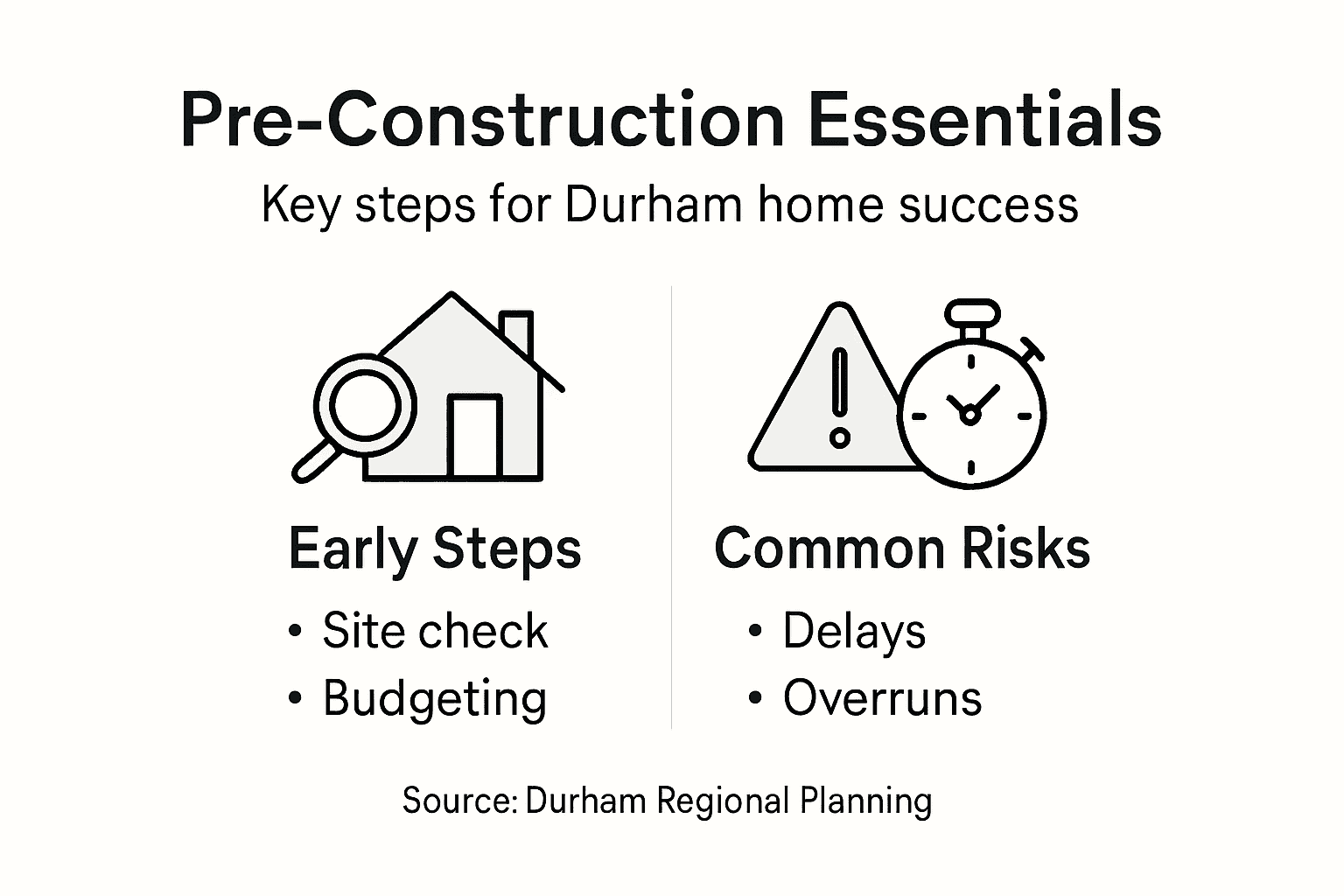
Financial risks are particularly critical, with experts recommending allocating approximately 12-15% of total project costs specifically to pre-construction planning and risk mitigation strategies. These preliminary investments can prevent exponentially higher expenses during actual construction.
Below is a summary of common pre-construction risks and proactive mitigation strategies for Durham homeowners:
| Risk Area | Example Problem | Proactive Mitigation |
|---|---|---|
| Scope creep | Unplanned design changes | Formal scope document |
| Budget overruns | Unexpected costs | Reserve contingency funds |
| Regulatory delays | Slow permit approval | Early submission of documents |
| Communication breakdown | Misunderstood requirements | Scheduled stakeholder meetings |
| Compliance issues | Fines or project halt | Consult local regulatory experts |
Comprehensive pre-construction planning is not an expense, but a strategic investment in project predictability and success.
Understanding potential risks allows Durham homeowners to develop robust contingency plans. Detailed assessments help identify potential challenges before they become costly problems, enabling more accurate budgeting and timeline management.
Pro tip: Create a comprehensive risk register during pre-construction that documents potential challenges, their likelihood, potential impact, and mitigation strategies.
Start Your Durham Home Project with Expert Pre-Construction Planning
Pre-construction planning is essential for Durham homeowners who want to avoid costly delays and surprises. Knowing the importance of clear project scope, detailed site analysis, and effective stakeholder coordination can save you time and money. At Henley Contracting, we understand these challenges and offer comprehensive Custom Build services that bring your vision to life with expert planning and execution.
Take control of your home construction journey today by partnering with a trusted local builder with over 30 years of experience. Visit Henley Contracting for reliable guidance on every step including Engineering and renovations. Let us help you build with confidence by starting strong with solid pre-construction planning. Contact us now and make your dream home plans a reality.
Frequently Asked Questions
What is pre-construction planning?
Pre-construction planning is the initial phase in residential construction that involves comprehensive groundwork, including project conceptualization, feasibility studies, site assessments, and financial planning, to ensure project success before physical construction begins.
Why is pre-construction planning important for homeowners?
Pre-construction planning is vital for homeowners as it helps mitigate potential risks, optimizes resource allocation, and establishes a clear roadmap for successful project execution, ultimately leading to a smoother construction process.
What common mistakes should homeowners avoid during pre-construction planning?
Common mistakes include insufficient scope definition, unrealistic budget estimations, poor stakeholder communication, and overlooking regulatory compliance. Avoiding these pitfalls helps ensure a more efficient and cost-effective construction process.
How can homeowners effectively manage communication among project stakeholders?
Homeowners can manage communication by scheduling comprehensive pre-construction meetings with all key stakeholders to clarify roles, set expectations, and document communication protocols, which helps prevent misunderstandings and conflicts during the construction phase.