

How to Plan a Home Renovation for Lasting Results
Planning a renovation in Durham Region can feel overwhelming when every decision impacts your budget and long-term satisfaction. Local homeowners face unique challenges with Canadian building codes, permit requirements, and material choices that influence both costs and project timelines. With so many variables, finding the right path means balancing your vision, local regulations, and personal priorities. This guide will help you make informed decisions, from setting realistic budgets to selecting trusted local contractors and durable materials for lasting value.
Table of Contents
- Step 1: Assess Renovation Goals And Local Regulations
- Step 2: Establish A Realistic Budget And Timeline
- Step 3: Select Trusted Contractors And Evaluate Credentials
- Step 4: Choose Quality Materials And Design Features
- Step 5: Verify Project Progress And Ensure Final Quality
Quick Summary
| Main Insight | Detailed Explanation |
|---|---|
| 1. Set Clear Renovation Goals | Define specific renovation objectives that address your home’s limitations and future needs to guide your strategy effectively. |
| 2. Understand Local Regulations | Research and comply with local building regulations to avoid costly fines and ensure project approval before beginning any renovations. |
| 3. Establish a Realistic Budget | Create a detailed budget including materials, labour, and a contingency fund to prepare for unexpected costs effectively. |
| 4. Choose Qualified Contractors | Select contractors by verifying credentials and checking references to ensure quality workmanship and adherence to project timelines. |
| 5. Monitor Progress and Quality | Regularly check on renovation progress and conduct final inspections to ensure quality outcomes and adherence to original specifications. |
Step 1: Assess renovation goals and local regulations
Successful home renovation begins with clear goals and a thorough understanding of local regulations. Your project’s success depends on strategic planning that aligns your vision with legal requirements and practical constraints.
Start by defining specific renovation objectives that address your home’s current limitations and future needs. Are you looking to improve functionality, increase property value, or enhance energy efficiency? Understanding these goals will help you develop a targeted renovation strategy. Canadian homeowners must carefully navigate local building regulations to ensure their project complies with municipal codes and zoning requirements.
Consult your local municipal office to identify which renovations require permits. Structural modifications like room additions, load-bearing wall changes, and significant electrical or plumbing work typically demand official approval. Additionally, consider environmental regulations that impact renovation projects. Canadian environmental standards often include energy efficiency requirements, waste management protocols, and sustainable building practices that can influence your renovation plans.
Here’s a quick comparison of common Canadian renovation permit types and their impact on your project:
| Permit Type | Typical Projects | Impact on Timeline | Key Considerations |
|---|---|---|---|
| Building Permit | Room additions, major structural changes | Can add 2-8 weeks | Requires design plans and inspections |
| Electrical Permit | Rewiring, installing new circuits | 1-4 week delay | Must follow safety codes, licensed electrician needed |
| Plumbing Permit | Adding bathrooms, major drain changes | 1-3 week delay | Inspection needed before covering work |
| Environmental Permit | Energy upgrades, demolition, waste disposal | Varies widely | Must comply with provincial standards and disposal rules |
Professional Tip: Schedule an initial consultation with a licensed contractor who understands local building codes and can help you navigate permit requirements efficiently.
Step 2: Establish a realistic budget and timeline
Planning a successful home renovation requires careful financial preparation and strategic scheduling. Your budget and timeline form the backbone of your entire project, determining its feasibility and potential success.
Begin by conducting a comprehensive assessment of your renovation scope and associated costs. Research material prices, labour expenses, and potential contingencies to create an accurate financial framework. Consider setting aside an additional 10-15% of your total budget for unexpected challenges or design modifications. Canadian renovation timelines often include pre-construction phases lasting 6-12 weeks, which account for design, planning, and permit acquisitions. These preliminary stages are critical for understanding the full project duration and potential complications.

Break down your budget into specific categories such as materials, labour, permits, and design fees. Obtain multiple quotes from reputable contractors to ensure competitive pricing and realistic cost estimates. Factor in potential seasonal variations that might impact construction schedules, particularly in regions with challenging Canadian winters. Create a flexible timeline that accounts for potential delays in material shipping, permit processing, and unexpected structural discoveries during renovation work.
Professional Tip: Develop a detailed spreadsheet tracking every anticipated expense and create buffer funds for potential unexpected renovation challenges.
Step 3: Select trusted contractors and evaluate credentials
Selecting the right contractor is a critical step in ensuring your home renovation project’s success. Your choice will directly impact the quality, timeline, and overall satisfaction of your renovation experience.
Begin by conducting thorough research and gathering recommendations from trusted sources. Ask friends, family, and neighbours for referrals, and explore online reviews and professional networks. Contractor selection strategies should include verifying credentials, checking licensing, and confirming insurance coverage. Request detailed portfolios that showcase previous work similar to your project, paying close attention to craftsmanship, design complexity, and client testimonials.
Validate each potential contractor’s professional standing by checking their credentials with local licensing boards. Request proof of Workers Compensation Board coverage, general liability insurance, and up-to-date trade certifications. Schedule in-person consultations with at least three contractors to compare their approaches, communication styles, and understanding of your specific renovation goals. During these meetings, ask detailed questions about project timelines, material sourcing, subcontractor management, and their approach to potential unexpected challenges.
Professional Tip: Always request and contact references directly, asking specific questions about the contractor’s reliability, communication, and quality of work.
Step 4: Choose quality materials and design features
Selecting the right materials and design features is crucial to creating a renovation that looks stunning and stands the test of time. Your choices will directly impact your home’s functionality, aesthetic appeal, and long-term value.
Canadian home renovation trends emphasize prioritizing energy-efficient upgrades and durable materials that enhance both comfort and property value. Focus on high-traffic areas like kitchens and bathrooms, where material quality makes the most significant difference. Consider investing in premium materials such as quartz countertops, hardwood flooring, and sustainable cabinetry that offer durability and aesthetic elegance. Pay attention to colour palettes and design elements that complement your home’s existing architecture while providing a modern, refreshed look.
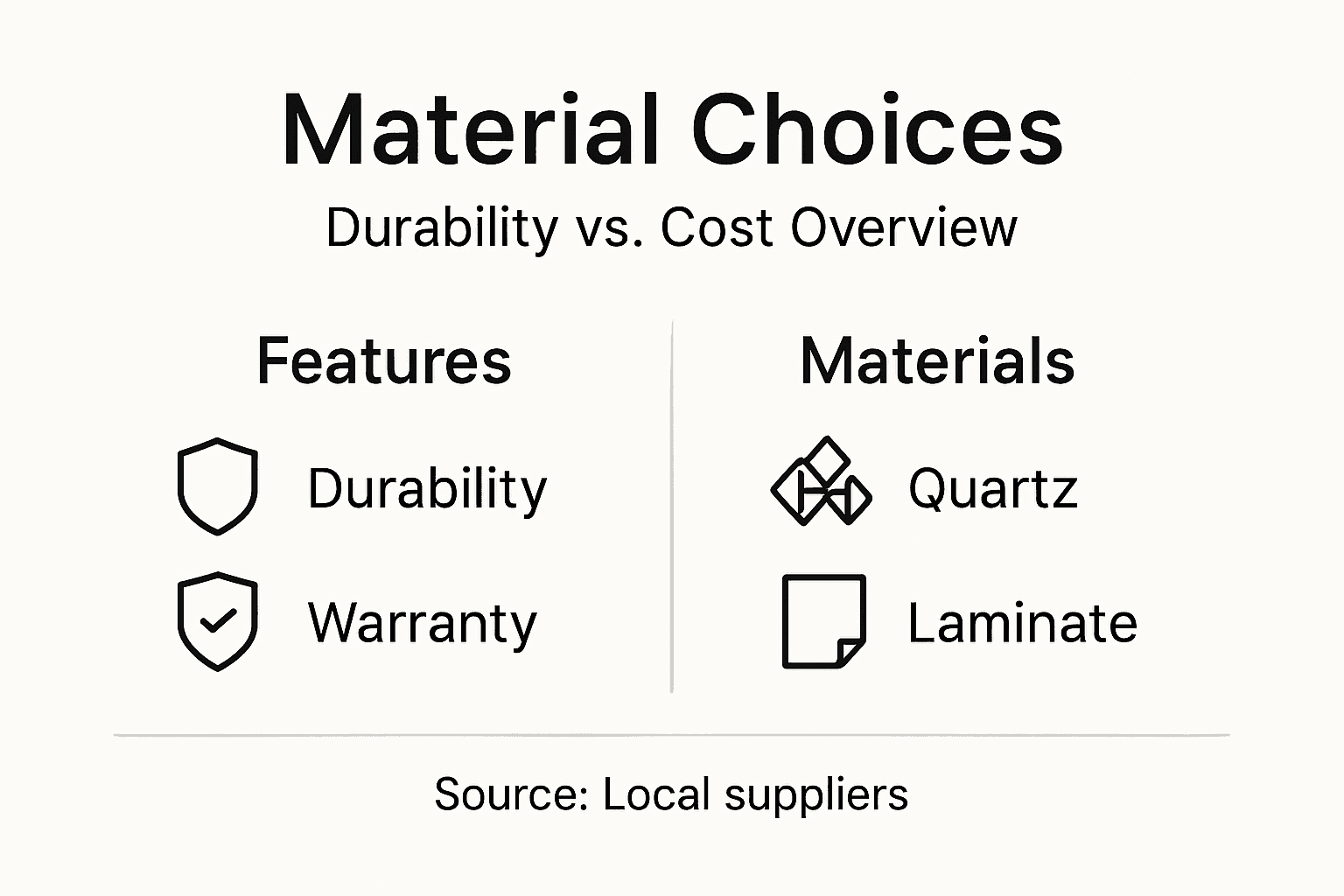
When evaluating materials, balance aesthetic preferences with practical considerations. Request material samples and examine them in your home’s natural lighting to understand how they interact with your space. Consider factors like maintenance requirements, durability, and long-term performance. Speak with your contractor about material sourcing, warranty options, and potential future maintenance needs. Look beyond initial costs and evaluate the lifetime value of your selected materials, considering factors like energy efficiency, maintenance expenses, and potential resale impact.
This summary highlights essential factors to consider when choosing materials for Canadian renovations:
| Material Feature | Benefit | Drawback | Cost Impact |
|---|---|---|---|
| Quartz Countertops | Durable, scratch resistant | Higher initial cost | Increases resale value |
| Hardwood Flooring | Timeless look, long lifespan | Sensitive to moisture | Moderate to high cost |
| Sustainable Cabinetry | Eco-friendly, healthy living | Limited design choices | May be more expensive |
| Energy-Efficient Windows | Reduces energy bills | Professional installation required | Upfront investment with long-term savings |
Professional Tip: Always request manufacturer warranties and detailed care instructions for your selected materials to ensure optimal long-term performance and appearance.
Step 5: Verify project progress and ensure final quality
Monitoring your home renovation’s progress and ensuring exceptional final results requires consistent attention and proactive communication. This critical stage determines whether your vision transforms into reality with precision and craftsmanship.
Schedule regular site visits and progress meetings with your contractor to track implementation and address potential issues immediately. Request detailed progress reports documenting completed work, upcoming milestones, and any challenges encountered. Final inspection preparation involves systematically verifying electrical systems, ventilation installations, structural modifications, and confirming all necessary permits are current. Carefully document each walkthrough, noting any discrepancies between original design plans and actual execution.
Conduct a comprehensive final review before project completion, examining every detail with a critical eye. Test all new installations thoroughly test functionality of electrical outlets, plumbing fixtures, heating and cooling systems, and built-in appliances. Verify that materials match original specifications and installation meets industry standards. Request demonstration of equipment operations and maintenance requirements from your contractor. Ensure you receive all warranty documentation, instruction manuals, and relevant certificates for installed components and systems.
Professional Tip: Create a detailed punch list documenting every minor imperfection or unfinished detail to ensure your contractor addresses all remaining items before final payment.
Bring Your Home Renovation Vision to Life with Henley Contracting
Planning a home renovation that delivers lasting results can feel overwhelming when facing complex budgets, local regulations, and material choices. The article highlights how crucial it is to align your goals with clear timelines, trusted contractors, and quality materials to avoid costly mistakes and ensure your renovation stands the test of time. If you are looking for expert guidance and reliable craftsmanship in Durham, Kawartha Lakes, or Northumberland County, Henley Contracting specializes in transforming these challenges into smooth, successful projects.

Explore our Renovations – Henley Contracting Ltd. page to see how our experienced team supports you through each renovation phase— from initial planning and permit navigation to selecting premium materials and executing with precision. With over 30 years of trusted service in Oshawa and surrounding communities, we help local homeowners avoid common renovation pitfalls through expert project management and transparent communication. Start your journey today by visiting Henley Contracting and discover how we make your lasting home renovation a reality. You can also learn about our Custom Build services for a completely personalized approach that fits your lifestyle.
Contact us now to secure your consultation and begin crafting the home you deserve.
Frequently Asked Questions
How do I assess my home renovation goals?
Begin by identifying your specific objectives, such as improving functionality, increasing property value, or enhancing energy efficiency. Create a list of your home’s limitations and future needs to guide your renovation planning process.
What local regulations should I consider before starting a renovation?
Consult your local municipal office to understand building codes and zoning requirements specific to your area. Make a checklist of any permits needed for structural changes, electrical work, or environmental considerations prior to beginning any construction.
How can I establish a realistic budget for my renovation?
Conduct a comprehensive assessment of all anticipated costs, including materials, labour, and permits. Set aside an additional 10-15% as a contingency fund for unexpected challenges to ensure your project remains feasible within your financial limits.
What should I look for when selecting a contractor?
Prioritize contractors with verified credentials, such as local licensing and insurance coverage. Schedule in-person consultations with at least three candidates to compare their approaches and ensure they understand your renovation goals clearly.
How can I ensure the quality of materials I choose for my renovation?
Research energy-efficient and durable materials that suit your renovation needs. Request samples to evaluate how different materials look in your home’s lighting, and consult with your contractor about long-term performance and maintenance requirements.
What steps should I take to monitor the progress of my renovation?
Schedule regular site visits and progress meetings with your contractor to discuss milestones and address any potential issues. Create a punch list of any minor imperfections or unfinished tasks to ensure everything is completed to your satisfaction before final payment.