

Why Renovate Before Selling – Maximizing Value in Ontario
Planning to sell your house in Durham Region brings a familiar question, where should you invest in renovations for the best market impact? Many Ontario homeowners wonder how to balance budget and buyer appeal, especially with so many options on the table. This guide clears up confusing renovation decisions by focusing on strategic home updates that truly boost value and help your property stand out to potential buyers.
Table of Contents
- Renovating Before Selling: Core Concepts
- Types of Pre-Sale Home Improvements
- Impact on Property Value and Buyer Appeal
- Legal Requirements for Renovations in Ontario
- Costs, Risks, and Return on Investment
- Common Mistakes and Smarter Alternatives
Key Takeaways
| Point | Details |
|---|---|
| Strategic Renovations | Focus on targeted home improvements that enhance appeal and functionality to attract a broader buyer base. |
| Cost-Effective Updates | Prioritise budget-friendly renovations like fresh paint and minor kitchen upgrades for a higher return on investment. |
| Legal Compliance | Ensure all renovations adhere to Ontario’s building codes and regulations to avoid penalties and complications during sale. |
| Common Mistakes | Avoid over-personalising renovations and focus on neutral, appealing upgrades that maximise market value without excessive spending. |
Renovating Before Selling: Core Concepts
Renovating a home before selling requires strategic planning and thoughtful investment. While not every renovation guarantees a high return, certain targeted improvements can significantly enhance your property’s marketability and sale price. Understanding which upgrades truly matter is key to maximizing your home’s potential in the Ontario real estate market.
When preparing a home for sale, focus on renovations that appeal to a broad range of buyers and address fundamental concerns. Strategic home updates should prioritize clarity, functionality, and aesthetic appeal. These improvements help potential buyers envision themselves living in the space, which can translate directly into faster sales and better offers.
Key renovation priorities include:
- Addressing basic maintenance issues
- Updating key living spaces like kitchens and bathrooms
- Improving overall home aesthetics
- Ensuring critical systems are in good working condition
Specifically, homeowners should concentrate on renovations that provide the most significant impact with minimal investment. Budget-friendly home improvements such as fresh paint, updated light fixtures, and minor kitchen and bathroom refreshes can dramatically enhance a home’s perceived value without requiring extensive financial commitment.
Pro tip: Before starting any renovation, consult a local real estate professional to understand which improvements are most valued in your specific Durham Region neighbourhood.
Types of Pre-Sale Home Improvements
Preparing a home for sale involves strategic improvements that can significantly enhance its market value and attract potential buyers. Pre-sale home improvements encompass a range of targeted upgrades designed to maximize visual appeal, functionality, and overall buyer interest in the Ontario real estate market.
Homeowners should prioritize improvements that address both exterior and interior aspects of their property. Exterior enhancements are particularly crucial, as they create the critical first impression for potential buyers. These improvements typically include:
- Landscaping upgrades
- Fresh exterior paint
- Updated front door
- Improved outdoor lighting
- Enhanced curb appeal elements
Inside the home, focus on renovations that provide the most significant visual and functional impact. Cost-effective interior updates can dramatically transform a property’s perceived value. Key interior improvements include refreshing paint colours, refinishing floors, replacing worn carpeting, and making targeted upgrades to high-impact areas like kitchens and bathrooms.
Critical system improvements should not be overlooked. Potential buyers are often concerned about major home systems, so addressing heating, ventilation, air conditioning, roof conditions, and window installations can significantly boost buyer confidence. These upgrades not only improve the home’s marketability but also demonstrate proactive maintenance to potential purchasers.
Pro tip: Consult a local real estate professional to identify the most valuable improvements specific to your Durham Region neighbourhood and budget.
Impact on Property Value and Buyer Appeal
Understanding the relationship between home renovations and property value is crucial for homeowners preparing to sell in the Ontario real estate market. Strategic renovation investments can significantly influence both buyer perception and final sale price, making them a critical consideration in the selling process.
Key areas that most dramatically impact property value and buyer appeal include:
- Kitchen and bathroom updates
- Functional system improvements
- Visual aesthetic enhancements
- Maintenance of critical home infrastructure
- Addressing potential buyer concerns
Buyers typically seek properties that demonstrate immediate livability and minimal future maintenance requirements. Upgrades to major systems like heating, ventilation, air conditioning, roofing, and windows not only increase perceived value but also reduce potential buyer hesitation. These improvements signal to potential purchasers that the home has been well-maintained and is ready for immediate occupancy.

Ontario property value trends demonstrate that strategic improvements can contribute substantially to overall property assessment. However, it’s essential to recognize that not all renovations provide equal returns. Homeowners should carefully consider the specific improvements most likely to resonate with buyers in their local market and neighbourhood.
Pro tip: Consult a local real estate appraiser to understand which specific renovations offer the best return on investment in your particular Durham Region market.
Legal Requirements for Renovations in Ontario
Navigating the legal landscape of home renovations in Ontario requires careful attention to provincial regulations and local bylaws. Ontario Building Code requirements establish critical standards that homeowners must follow when undertaking renovation projects, ensuring safety, accessibility, and quality of construction.
Key legal considerations for home renovations include:
- Obtaining necessary municipal building permits
- Complying with zoning restrictions
- Following accessibility standards
- Meeting energy efficiency requirements
- Ensuring structural integrity and safety
- Adhering to local heritage preservation guidelines
Permit requirements vary depending on the scope and nature of renovation work. Minor cosmetic updates might not require formal permissions, but structural changes, electrical work, plumbing modifications, and significant alterations typically demand official approvals. Home construction regulatory oversight through the Home Construction Regulatory Authority (HCRA) helps protect homeowners by ensuring contractors and renovation projects meet established standards.
Non-compliance can result in serious consequences, including potential fines, mandatory corrective work, challenges with property insurance, and complications during future property sales. Homeowners should consult with local municipal authorities, licensed contractors, and potentially legal professionals to ensure full compliance with all relevant regulations before commencing renovation work.
Pro tip: Always request and verify a contractor’s licensing and insurance credentials before starting any renovation project in Ontario.
Costs, Risks, and Return on Investment
Homeowners considering renovations before selling must carefully evaluate the financial implications and potential returns. Home renovation investment strategies require a nuanced approach that balances cost, market expectations, and potential value increase.
Renovation costs and potential returns vary widely across different project types:
- Kitchen renovations: Highest potential return (75-100%)
- Bathroom updates: Significant value improvement
- Minor cosmetic improvements: Lower cost, higher percentage return
- Major structural changes: Higher risk, variable returns
- Landscaping and exterior updates: Moderate investment potential
Financial risks are inherent in any renovation project. Renovation budget considerations suggest that overspending or over-personalizing can dramatically reduce potential returns. Strategic improvements should align with neighbourhood standards and current market expectations, avoiding excessive investments that won’t translate to proportional increases in property value.
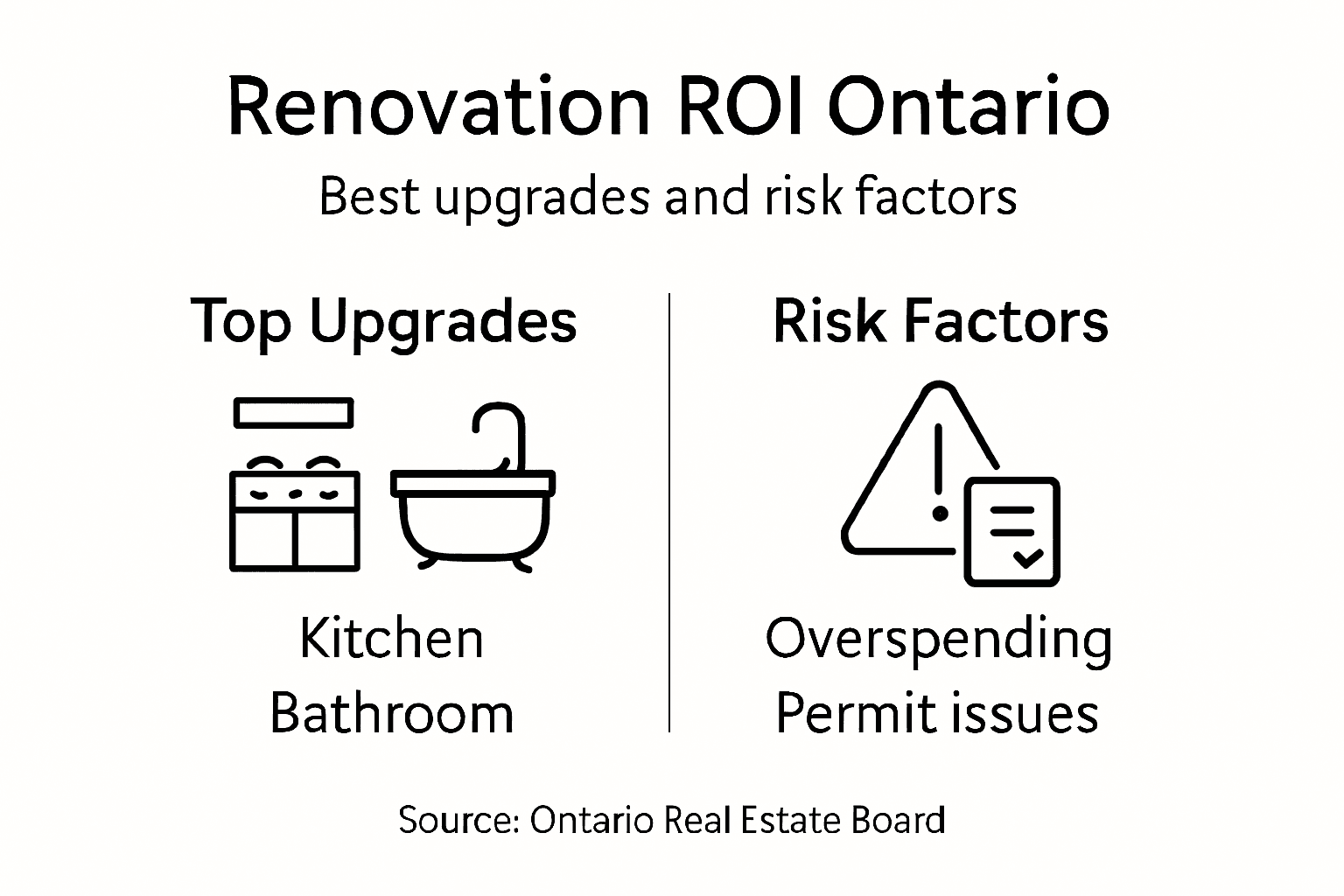
Successful pre-sale renovations require careful research and strategic planning. Homeowners should consult local real estate professionals to understand which improvements will most effectively increase their property’s marketability and potential sale price. The goal is to make targeted, cost-effective upgrades that appeal to potential buyers without unnecessarily draining financial resources.
Here’s a comparison of typical renovations by cost, risk, and potential return in Ontario:
| Renovation Type | Average Cost Range | Typical Return (%) | Financial Risk Level |
|---|---|---|---|
| Minor kitchen update | $5,000 – $15,000 | 75–100 | Low if done strategically |
| Bathroom refresh | $3,000 – $12,000 | 60–80 | Moderate, material choice |
| Full kitchen remodel | $25,000 – $45,000 | 60–85 | Higher, potential over-spend |
| Exterior landscaping | $2,000 – $8,000 | 50–65 | Low to moderate |
| Major structural change | $30,000+ | 30–50 | High, permits and overruns |
Pro tip: Obtain multiple contractor quotes and carefully compare potential return on investment before committing to any significant renovation project.
Common Mistakes and Smarter Alternatives
Homeowners often make costly errors when preparing their property for sale, potentially reducing their home’s market value and appeal. Pre-sale renovation pitfalls can significantly impact the selling process, making it crucial to understand common mistakes and their smarter alternatives.
Common renovation mistakes to avoid include:
- Over-personalizing spaces
- Investing in luxury upgrades
- Completing unnecessary major renovations
- Ignoring neighbourhood market standards
- Spending excessively on low-return projects
Costly renovation traps often emerge when homeowners make emotional or uninformed decisions. High-expense projects like installing luxury features, finishing basements, or adding specialized amenities like hot tubs rarely recoup their full investment. Instead, strategic improvements should focus on neutral, broadly appealing upgrades that enhance the home’s overall presentation and functionality.
Smart alternatives prioritize cost-effective, universally attractive improvements. These might include fresh neutral paint, minor kitchen and bathroom updates, improved lighting, and addressing basic maintenance issues. The goal is to create a clean, well-maintained appearance that allows potential buyers to envision themselves in the space without feeling overwhelmed by the previous owner’s specific taste or expensive customizations.
To help you avoid common mistakes, see smart alternatives for maximizing pre-sale value:
| Common Mistake | Smarter Alternative | Benefit for Sellers |
|---|---|---|
| Over-personalized décor | Use neutral paint colours | Appeals to wider buyer pool |
| Luxury kitchen appliances | Update lighting and hardware | Modern look without high spend |
| Custom luxury upgrades | Prioritize basic repairs and maintenance | Shows care, boosts buyer confidence |
| Ignoring minor repairs | Fix leaks and update worn finishes | Reduces buyer concerns immediately |
Pro tip: Consult a local real estate professional to identify the most cost-effective improvements for your specific neighbourhood market.
Transform Your Home Renovation Vision into a Strategic Sale Advantage
Renovating before selling your home in Ontario is a smart way to address key challenges like maximizing property value and attracting confident buyers. This article highlights the importance of targeted renovations such as updating kitchens and bathrooms, fixing maintenance issues, and enhancing curb appeal. If you are looking to avoid common costly mistakes and want to invest wisely, our team at Henley Contracting is here to help you make those strategic improvements with craftsmanship you can trust. Discover how our Renovations services in Durham, Kawartha Lakes, and surrounding regions can elevate your home’s market appeal and ensure your renovations comply with local standards.

Take the next step to maximize your home’s value by partnering with seasoned experts who understand Ontario’s real estate nuances. Visit Henley Contracting today to explore our comprehensive renovation solutions and contact us for a consultation. Make your renovation investment work for you and sell your home faster with confidence.
Frequently Asked Questions
What renovations provide the best return on investment when selling a home?
Kitchen and bathroom updates typically provide the highest return on investment, with returns averaging between 60-100%. Minor cosmetic improvements, like fresh paint and updated lighting, can also yield significant returns.
How can I enhance my home’s curb appeal before selling?
Curb appeal can be enhanced through landscaping upgrades, fresh exterior paint, a new front door, and improved outdoor lighting. These changes create a positive first impression for potential buyers.
Are all home renovations worth the cost before selling?
Not all renovations guarantee a return on investment. Homeowners should focus on cost-effective updates that appeal to a wide range of buyers and avoid over-personalizing or completing high-cost projects that do not resonate with the market.
Do I need permits for home renovations before selling?
Yes, obtaining the necessary building permits is crucial for renovations. Depending on the scope of the work, structural changes or significant improvements typically require permits to comply with local regulations and safety standards.