

Guide to Managing Renovation Projects for Homeowners
Starting a home renovation in Durham Region can quickly become overwhelming without a smart plan and strong financial groundwork. Balancing what you want with what you can reasonably spend is often the toughest part for homeowners aiming to avoid costly errors. By focusing on a comprehensive understanding of your renovation needs and a realistic budget from the start, you set up every project phase for success and help ensure that your investment delivers lasting value and quality craftsmanship.
Table of Contents
- Step 1: Assess Renovation Needs And Establish A Realistic Budget
- Step 2: Select Reputable Contractors And Secure Required Permits
- Step 3: Develop A Detailed Project Timeline And Communication Plan
- Step 4: Monitor Progress And Manage Onsite Activities Effectively
- Step 5: Review Completed Work And Verify Craftsmanship Quality
Quick Summary
| Key Point | Explanation |
|---|---|
| 1. Assess renovation needs thoroughly | Evaluate your home’s condition and identify areas for improvement and essential repairs. |
| 2. Secure multiple contractor quotes | Obtain detailed estimates from at least three licensed contractors to ensure competitive pricing and quality. |
| 3. Create a comprehensive project timeline | Develop a timeline with clear milestones and communication protocols to track progress and manage expectations. |
| 4. Monitor onsite activities regularly | Conduct weekly inspections and document progress to address issues immediately and maintain quality control. |
| 5. Perform a detailed final inspection | Review workmanship against your specifications to ensure quality and identify any issues before project completion. |
Step 1: Assess renovation needs and establish a realistic budget
Starting a home renovation project requires thoughtful planning and strategic financial preparation. Your goal is to create a comprehensive understanding of your renovation requirements while developing a budget that balances your dreams with fiscal responsibility.
Begin by conducting a thorough evaluation of your home’s current condition and identifying specific areas needing improvement. This means walking through each room and noting structural issues, functional limitations, and aesthetic upgrades you desire. Pay close attention to critical systems like electrical, plumbing, and structural components that might require significant investment. Budgeting strategies for renovation costs often recommend prioritizing essential repairs over cosmetic enhancements.
To establish a realistic budget, consider these key steps:
- Research current market prices for materials and labour in your specific region
- Get multiple professional quotes from reputable contractors
- Factor in a contingency fund of 10-20% for unexpected expenses
- Assess your financing options including savings, home equity loans, or lines of credit
When calculating potential costs, remember that renovation expenses in the Durham Region can vary significantly based on project complexity. Consulting local contractors and reviewing capital planning approaches can help you develop a more accurate financial projection.
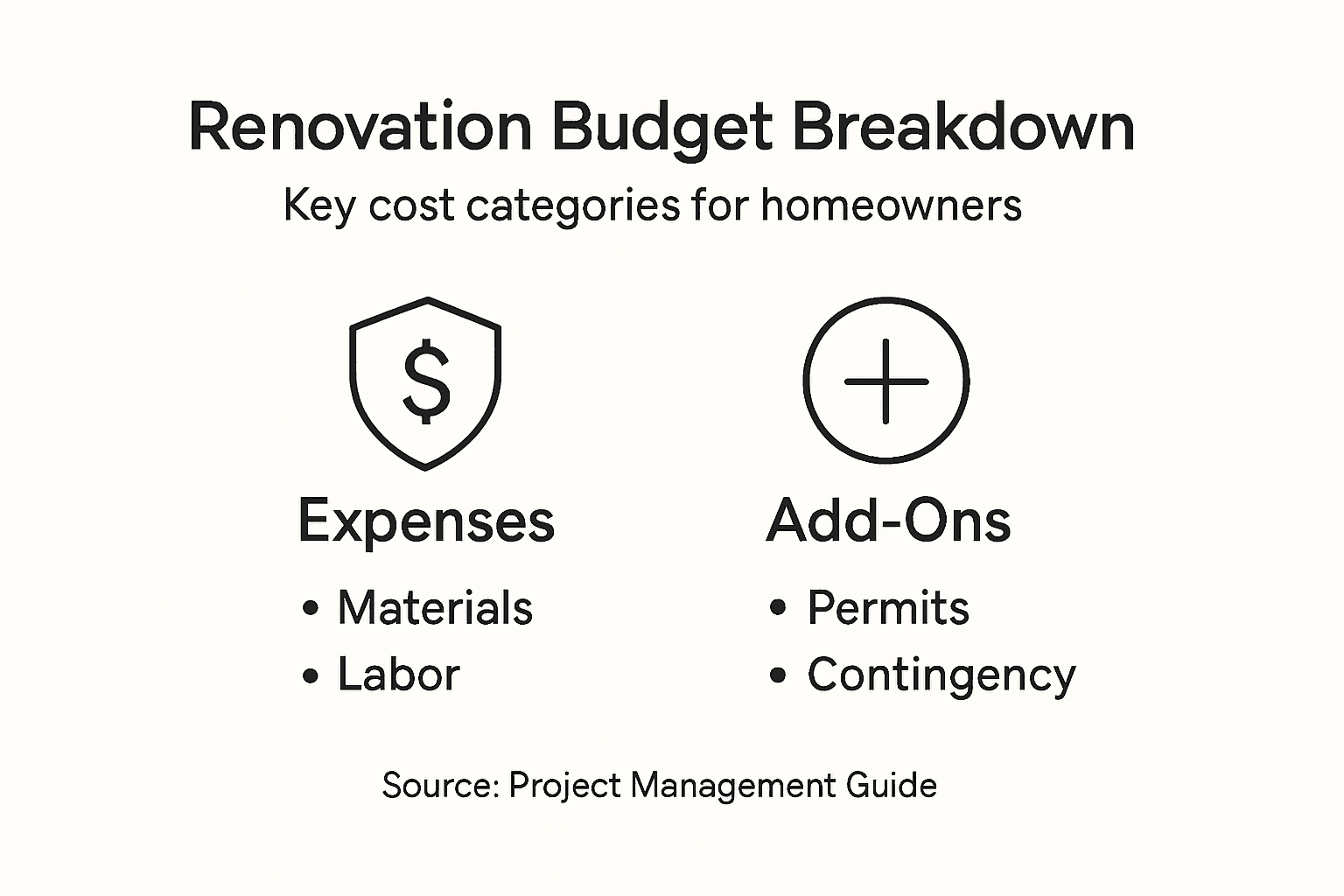
Here’s an overview of common renovation financing options and their main considerations:
| Financing Method | Key Requirements | Typical Use Case |
|---|---|---|
| Personal Savings | Lump sum on hand | Smaller or phased renovations |
| Home Equity Loan | Available home equity; approval | Large-scale renovations |
| Line of Credit | Good credit rating | Ongoing or unpredictable costs |
| Government Grants | Meets grant criteria | Energy efficiency upgrades |
Pro tip: Always document your renovation needs and budget discussions in writing to maintain clarity and prevent potential misunderstandings with contractors.
Step 2: Select reputable contractors and secure required permits
Selecting the right contractors and navigating the permit process are critical steps that can make or break your renovation project. Your goal is to find skilled professionals who understand local regulations and can help you successfully navigate the complex landscape of home improvements.

Begin by researching building permit requirements in your specific municipality. Different regions in Ontario have unique regulations, so understanding these nuances is crucial. Look for contractors who are not only licensed but also have extensive experience working with local building departments and comprehend the intricate permit processes.
When evaluating potential contractors, consider these essential steps:
- Check professional credentials including licences, insurance, and WorkSafeOntario coverage
- Request detailed written estimates from at least three different contractors
- Verify past project references and review their portfolio of completed work
- Confirm their familiarity with local building codes and permit procedures
Choosing a contractor is about more than finding the lowest price – it’s about finding a professional who understands your vision and can navigate regulatory requirements effectively.
Working with contractors who understand project implementation protocols can significantly streamline your renovation process. Experienced professionals will help you anticipate potential challenges, ensure all necessary permits are secured, and maintain compliance with municipal regulations.
Pro tip: Always request and verify a contractor’s permit history and ensure they are willing to handle all permit applications on your behalf.
Step 3: Develop a detailed project timeline and communication plan
Creating a comprehensive project timeline and communication strategy is essential for keeping your renovation on track and minimising potential misunderstandings. Your objective is to establish clear expectations, milestones, and channels of communication that will help your project flow smoothly from start to finish.
Begin by developing strategic implementation timelines that break down your entire renovation into manageable phases. This approach allows you to anticipate potential challenges and create realistic checkpoints for progress evaluation. Effective timelines should include detailed breakdowns of each project stage, estimated durations, and specific deliverables.
Consider these critical components when developing your project timeline:
- Establish clear start and end dates for the entire renovation
- Define milestone checkpoints for each major phase of the project
- Create contingency buffers to account for unexpected delays
- Outline specific communication protocols with your contractor
A well-structured timeline is your roadmap to a successful renovation – it transforms chaos into a coordinated effort.
Working with contractors to develop sustainable project strategies ensures transparency and sets clear expectations. Regular communication meetings, preferably weekly, will help you track progress, address concerns promptly, and maintain alignment with your original vision.
Pro tip: Create a shared digital project management tool where all stakeholders can track real-time progress and communicate instantly.
Step 4: Monitor progress and manage onsite activities effectively
Effective onsite management is crucial to ensuring your renovation stays on track, meets quality standards, and remains within your established budget and timeline. Your primary goal is to maintain active oversight without micromanaging the professional contractors you’ve carefully selected.
Implement a systematic approach to data governance and monitoring that allows you to track renovation progress comprehensively. This involves establishing clear checkpoints, documenting project stages, and creating a structured system for addressing potential issues before they escalate into significant problems.
Consider these key strategies for effective onsite management:
- Schedule regular weekly site inspections
- Maintain a detailed photographic and written progress log
- Document any changes or unexpected challenges
- Communicate immediately about potential deviations from original plans
Consistent monitoring transforms potential chaos into a controlled, predictable renovation experience.
Adopting principles from safety culture and continuous monitoring can help you proactively manage risks and ensure quality. This means not just watching progress, but actively engaging with contractors, understanding each phase of work, and maintaining open communication channels.
Pro tip: Create a shared digital folder where contractors can upload daily progress photos and notes, ensuring total transparency and easy reference.
Step 5: Review completed work and verify craftsmanship quality
The final stage of your renovation project requires meticulous inspection to ensure every aspect meets your expectations and professional standards. Your goal is to conduct a comprehensive review that validates the quality of workmanship, materials, and overall project execution.
Begin by implementing systematic project review protocols that provide a structured approach to assessing the completed work. This involves carefully examining each element of the renovation against your original specifications, contract requirements, and industry quality standards.
Focus on these critical areas during your final inspection:
- Check structural integrity and alignment
- Verify precise measurements and installation
- Inspect finishing details and surface quality
- Test functionality of installed systems and components
A thorough final review is not about finding fault, but ensuring your vision has been perfectly realized.
During the inspection, pay close attention to both visible and hidden elements. Look beyond surface appearances and test the functional aspects of your renovation. This means opening and closing doors, checking electrical outlets, testing plumbing fixtures, and examining the quality of paintwork, tiling, and other finishing details.
This summary shows how regular project reviews benefit your renovation outcome:
| Aspect Reviewed | Benefit Provided | Long-term Impact |
|---|---|---|
| Structural elements | Ensures safety and compliance | Prevents costly repairs later |
| Functional systems | Confirms proper operation | Reduces warranty claims |
| Finishing touches | Delivers desired aesthetics | Increases property value |
| Professional documentation | Provides clear records | Assists resale and insurance |
Pro tip: Bring a detailed checklist and take high-resolution photographs during your final inspection to document the completed work and create a clear record for potential future reference.
Take Control of Your Renovation Project with Expert Guidance
Managing a home renovation can be overwhelming when balancing budgeting strategies, selecting reputable contractors, securing permits, and keeping your project on schedule. If the challenge of navigating these crucial steps feels daunting, you are not alone. Many homeowners struggle to maintain transparency, monitor progress, and verify workmanship quality throughout their renovation journey. You deserve a partner who understands these pain points and can help you transform your vision into reality with confidence.
At Henley Contracting, we specialise in delivering trusted residential renovations tailored to your unique goals. Our team brings over three decades of experience serving communities across Durham, Kawartha Lakes, and Northumberland County. By working with seasoned professionals who are familiar with local building codes and project implementation timelines, you gain the peace of mind that comes from knowing your renovation is in skilled hands. Explore our wide range of renovations services designed to guide you through every phase, from detailed project planning to final craftsmanship inspection.

Ready to turn your renovation plans into a seamless, successful project? Visit Henley Contracting today to discover how our custom approaches and attentive communication can simplify your renovation experience. Start with a free consultation and take the first step toward your dream home with confidence and clarity. Explore more about our custom build options and learn why local homeowners trust us to bring their visions to life.
Frequently Asked Questions
How do I assess my renovation needs effectively?
To assess your renovation needs, conduct a thorough evaluation of your home by walking through each room and identifying areas that require improvement. Make a list of both structural issues and aesthetic upgrades you desire to focus on priority areas that will enhance both functionality and appearance.
What should I include in my renovation budget?
Your renovation budget should include estimates for materials, labour, and a contingency fund of approximately 10-20% for unexpected expenses. Research current market prices and obtain multiple quotes from contractors to create a realistic financial plan that aligns with your renovation goals.
How can I find reputable contractors for my renovation project?
To find reputable contractors, research their credentials, request detailed written estimates, and verify references from past projects. Ensure they have experience with local building codes and permit processes, as this will help streamline your renovation experience.
What steps should I take to develop a project timeline?
Develop a project timeline by breaking your renovation into phases, establishing clear start and end dates, and defining milestone checkpoints for each stage. Consider incorporating contingency buffers for potential delays to keep the renovation on track and manage expectations effectively.
How can I monitor progress during the renovation?
Monitor progress by scheduling regular inspections, maintaining a detailed log of advancements, and documenting any unexpected challenges. Communicate immediately with your contractor about deviations from the plan to address issues promptly and ensure the project stays on schedule.
What should I check during the final inspection of the completed renovation?
During the final inspection, thoroughly check structural integrity, verify precise measurements, inspect finishing details, and test the functionality of installed systems. Use a checklist to document your findings, ensuring that all elements meet your expectations and quality standards.