

Role of Construction Manager – Ensuring Quality Builds
Planning a custom home renovation or addition in Durham Region can quickly feel overwhelming when you try to juggle design choices, budgets, trades, and schedules all at once. The need for a reliable construction manager becomes clear fast. For homeowners from Pickering to Uxbridge, a skilled manager is much more than a site supervisor. They plan, organise, direct, and evaluate each step to ensure your project stays on track, within budget, and meets your vision for quality craftsmanship. Discover how this critical role turns complex renovations into successful, stress-free experiences.
Table of Contents
- Defining The Construction Manager’s Purpose
- Types Of Construction Managers In Residential Work
- Core Skills And Competencies Required
- Legal And Safety Responsibilities In Ontario
- Managing Quality, Budget, And Timelines
- Common Pitfalls And How To Avoid Them
Key Takeaways
| Point | Details |
|---|---|
| Construction Manager Role | A construction manager coordinates the entire renovation process, ensuring it stays on schedule, within budget, and meets quality standards. |
| Types of Managers | Different types of construction managers, including site managers, general contractors, and project managers, serve varying project needs based on complexity and scope. |
| Core Skills Needed | Effective construction managers require strong leadership, communication, and stakeholder coordination skills, alongside technical knowledge of construction practices. |
| Legal Responsibilities | In Ontario, construction managers hold legal responsibilities for health and safety compliance and must navigate zoning and building codes specific to residential projects. |
Defining the Construction Manager’s Purpose
When you’re planning a custom home renovation or addition in the Durham Region, you need someone who can see the entire project from start to finish. A construction manager fills that critical role. Think of them as the conductor of an orchestra—they coordinate all the moving parts so everyone plays in harmony. Rather than simply overseeing the crew on site, a construction manager plans, organises, directs, and evaluates the entire project to make sure it stays on schedule, meets your specifications, and comes in within budget. In a region like Durham with diverse neighbourhoods from Ajax to Uxbridge, this oversight becomes even more valuable, as every property presents unique challenges and requirements.
Your construction manager’s purpose extends well beyond one single responsibility. They coordinate with your architect to translate designs into reality, work with engineers to address technical complexities, manage multiple subcontractors (electricians, plumbers, framers), and keep you informed at every stage. Quality control sits at the heart of what they do. They inspect work as it progresses, catch problems before they become expensive disasters, and ensure everything meets building codes and safety standards. When you’re investing significant resources into a kitchen renovation, bathroom addition, or second storey extension, having someone actively managing quality prevents costly rework later. The construction manager also handles supervision and coordination from planning through project close-out, which means they’re involved from the moment you sign the contract through the final walkthrough.
Beyond coordination and quality control, your construction manager manages risk, schedules work to flow logically, tracks expenses against the budget you’ve approved, and serves as the main communication link between you and everyone else involved in the project. When a supply delay threatens your timeline, they problem-solve. When weather impacts your framing schedule, they adjust. When a structural discovery requires a design modification, they manage the conversation between you and your architect. This role prevents the chaos that can occur when homeowners try to manage these relationships themselves—a situation that often leads to miscommunications, missed deadlines, and inflated costs.
For custom home projects in Henley Contracting’s service area (Pickering, Whitby, Bowmanville, and beyond), this oversight becomes the difference between a build that meets expectations and one that creates stress and financial overruns. The construction manager’s ultimate purpose is straightforward: deliver your project on time, within budget, and to the quality standard you deserve.
Pro tip: Ask your construction manager for a detailed project schedule and budget breakdown before work begins—this creates a clear reference point for tracking progress and catching any deviations early, which allows for faster corrections.
Types of Construction Managers in Residential Work
When you start a renovation or custom home project in Durham, you’ll discover that not all construction managers work the same way. The role takes on different shapes depending on your project’s scale and complexity. In residential construction across Canada, construction managers work in different capacities as general contractors, site managers, or project managers. A single-family home renovation in Ajax looks vastly different from managing a multi-unit addition or a ground-up custom build in Uxbridge, and the manager’s responsibilities shift accordingly. Understanding these variations helps you identify exactly who you need on your team.
Site Managers focus on day-to-day operations at your property. They’re on site regularly, sometimes daily, ensuring that subcontractors follow the schedule, work meets quality standards, and safety protocols are followed. They handle the immediate problem-solving—managing material deliveries, coordinating trades, and addressing issues as they arise during construction. For a kitchen renovation or bathroom addition, a site manager keeps everything flowing smoothly and catches problems before they escalate. General Contractors take on broader responsibility. Beyond day-to-day site management, they handle contracts with subcontractors, manage budgets, negotiate with suppliers, and often work with multiple projects simultaneously. They’re the authority figure who makes decisions and bears responsibility for the project’s overall success. Project Managers operate at a higher level, often overseeing multiple jobs or large-scale builds. They manage timelines across several properties, track spending across the entire portfolio, and focus on strategic planning rather than daily site operations.
The role you need depends on your situation. A straightforward bathroom renovation might require primarily a site manager who ensures quality and keeps trades organised. A complex custom home addition or second-storey extension in Pickering or Whitby likely requires someone with broader authority—a general contractor or experienced project manager who can handle unexpected structural discoveries, design modifications, and the constant coordination between you, your architect, and multiple trades. When you’re working with how to manage home construction for best results, understanding which type of manager suits your project prevents frustration and keeps costs under control.
In residential construction across the region, many homeowners work with a general contractor who essentially serves as all three types simultaneously, scaling their involvement based on what the project demands. What matters most is selecting someone with experience in your specific type of work (renovations versus new construction, simple versus complex) and the authority to make decisions quickly.
Here’s how different types of residential construction managers compare:
| Role | Focus Area | Authority Level | Typical Project Size |
|---|---|---|---|
| Site Manager | Daily site operations | Limited | Single renovations, small jobs |
| General Contractor | Scope, contracts | Moderate to high | Large renovations, additions |
| Project Manager | Portfolio strategy | Highest | Multiple, complex builds |
Pro tip: Ask potential managers to describe a recently completed project similar to yours and explain exactly what they did on site versus what they delegated—their answer reveals whether they match your project’s actual needs.
Core Skills and Competencies Required
A construction manager’s effectiveness depends far less on what they know about hammers and nails, and far more on what they can orchestrate with people, budgets, and timelines. The technical foundation matters, certainly, but the real differentiator lies in soft skills that allow them to navigate the complexity of your project. Core competencies include project planning, scheduling, budgeting, contract negotiation, and quality control, but these technical abilities only work when paired with strong leadership and communication. When your construction manager meets with you, your architect, and your electrician in the same week, they need the ability to translate between perspectives—understanding what matters to each party and keeping everyone aligned toward the same goal. Problem-solving sits at the centre of everything they do. When a structural discovery requires a design change, when a supplier cannot deliver materials on schedule, or when weather delays framing, your manager must think creatively and act decisively.
Beyond the mechanics of planning and budgeting, your construction manager needs strong stakeholder coordination skills. In a Durham region custom home project, they’re managing relationships with you as the homeowner, your architect who designed the vision, engineers who ensure it’s structurally sound, the general contractor overseeing the crew, multiple subcontractors (electricians, plumbers, HVAC specialists), and building inspectors. Each of these parties has different priorities and communication styles. A skilled manager translates requirements downward to trades and translates concerns upward to you in language each group understands. They also need financial acumen—not necessarily accounting credentials, but the ability to understand budgets, track spending, catch cost overruns early, and make informed decisions about value engineering when necessary. When you’re investing $80,000 into a kitchen renovation or $150,000 into a second-storey addition, having someone who understands the financial implications of every decision protects your investment.
Technical knowledge remains essential but often gets overemphasised. Your construction manager needs to understand building codes in Ontario, know how construction methods work, recognise quality workmanship when they see it, and understand regulatory requirements and scheduling techniques that govern residential projects. They don’t need to be able to wire a panel themselves, but they need to know whether the electrician is doing it correctly. They should understand how weather impacts different trades, why certain tasks must precede others, and what inspections are required at each phase. This foundation allows them to catch problems before they become expensive corrections and to anticipate challenges before they derail your timeline.
Pro tip: When interviewing potential managers, ask them to walk you through how they’d handle a specific scenario—a material delay, a budget overrun, or an unexpected structural issue—their detailed response reveals whether they have the problem-solving depth your project needs.
Legal and Safety Responsibilities in Ontario
When you hire a construction manager for your Durham region project, you’re bringing on someone who carries serious legal responsibility under Ontario law. This isn’t simply about following common sense safety practices. Under Ontario’s Occupational Health and Safety Act (OHSA), the construction manager occupies a specific legal role with defined duties and potential liability. The OHSA designates the construction manager as the “constructor”, and this designation carries weight. As the constructor, your manager bears primary responsibility for ensuring all parties comply with health and safety regulations, overseeing hazard mitigation, and providing safety training to workers on site. When an accident occurs, investigators look to the constructor first to determine whether adequate safety measures were in place. This legal standing means you need someone who takes safety seriously as a legal obligation, not merely as a practical concern.
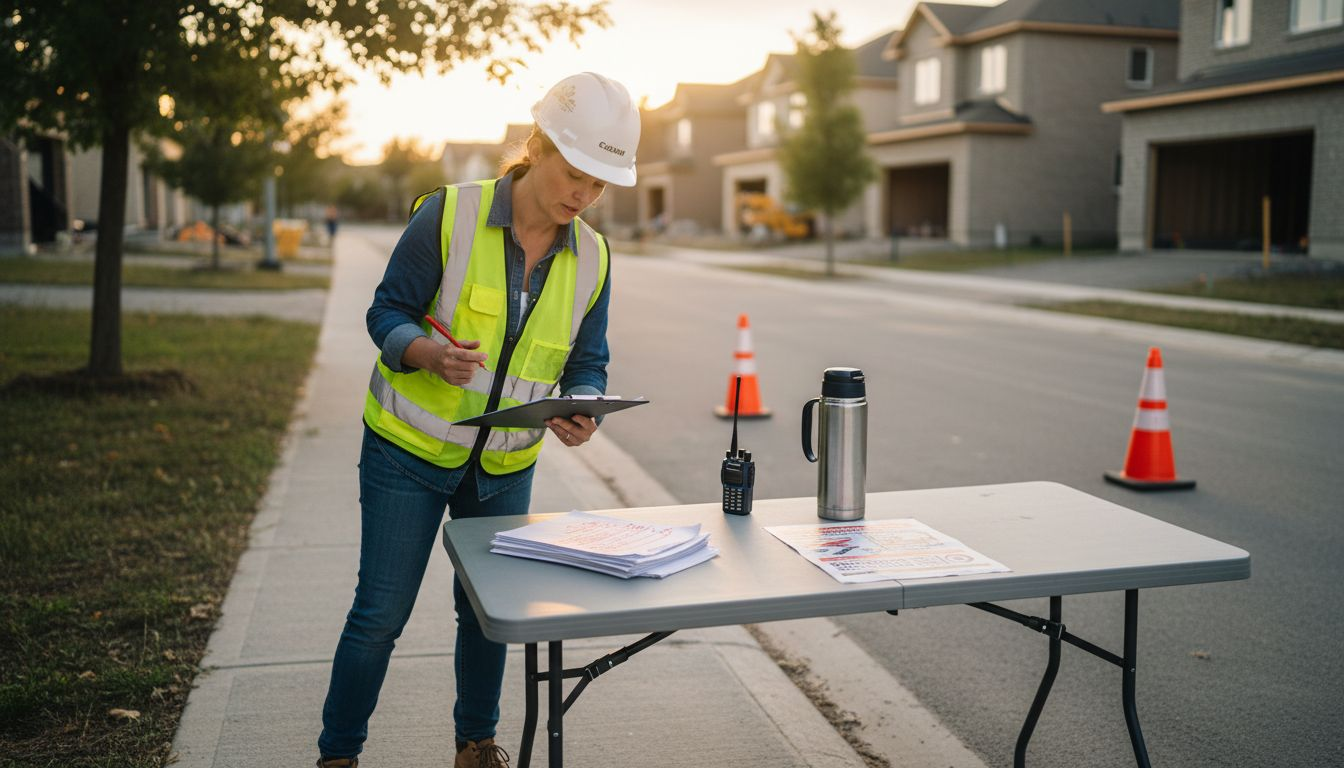
Your construction manager’s safety responsibilities extend beyond the site itself. They must ensure proper notifications to authorities before work begins, maintain documentation of safety measures, oversee that all workers and subcontractors follow required safety protocols, and address hazards immediately when discovered. They coordinate between multiple parties—the owner (that’s you), the general contractor, various subcontractors, and workers—ensuring everyone understands their specific safety obligations. Constructors must ensure compliance with the Act, protect worker health and safety, and maintain standards across all phases of work. For a custom home addition or major renovation in Pickering, Whitby, or Uxbridge, this means your manager documents inspections, maintains safety records, ensures protective equipment is available and used, and can demonstrate they took reasonable precautions if any incident occurs. The liability exposure here is genuine. If a worker is injured because your construction manager failed to implement proper safety measures, that manager can face personal liability, and your project could face work stoppages and legal complications.
Beyond worker safety, construction managers must understand zoning, building code compliance, and permit requirements specific to Ontario. Understanding residential construction regulations in Ontario helps managers navigate the approval process correctly and avoid costly violations. They verify that your project meets zoning requirements, that all necessary permits are obtained before work begins, and that inspections happen at required intervals. They maintain awareness of changes to building codes and ensure the work complies with current standards rather than outdated practices. This legal diligence protects you from discovering after project completion that work doesn’t meet code, requiring expensive corrections.
The relationship between legal responsibility and quality becomes clear when you understand that compliance with safety and building codes directly supports quality craftsmanship. A manager who cuts corners on safety documentation often cuts corners on quality as well. When evaluating potential construction managers, their approach to legal compliance reveals their overall professionalism. Ask specifically how they document safety measures, how often they’ve worked with inspectors in your area, and how they’ve handled past code violations or safety incidents.
Pro tip: Request proof of liability insurance and ask your manager to explain specifically how they document safety compliance on site—their detailed answer indicates whether they understand their legal obligations or simply go through motions.
Managing Quality, Budget, and Timelines
These three elements—quality, budget, and timelines—form an interconnected triangle. Compromise one and the others suffer. Your construction manager’s core responsibility involves balancing all three simultaneously, a task that requires constant attention and informed decision-making. Construction managers prepare cost estimates and schedules, monitor progress, and implement quality control programs to keep projects aligned with your initial expectations. In practice, this means your manager starts with a detailed budget breakdown showing exactly where every dollar goes, creates a realistic timeline that sequences trades logically, and establishes quality benchmarks against which they’ll measure work as it progresses. When you’re investing $75,000 into a bathroom renovation or $200,000 into a second-storey addition in Ajax or Uxbridge, understanding how your manager maintains this balance becomes critical to protecting your investment.
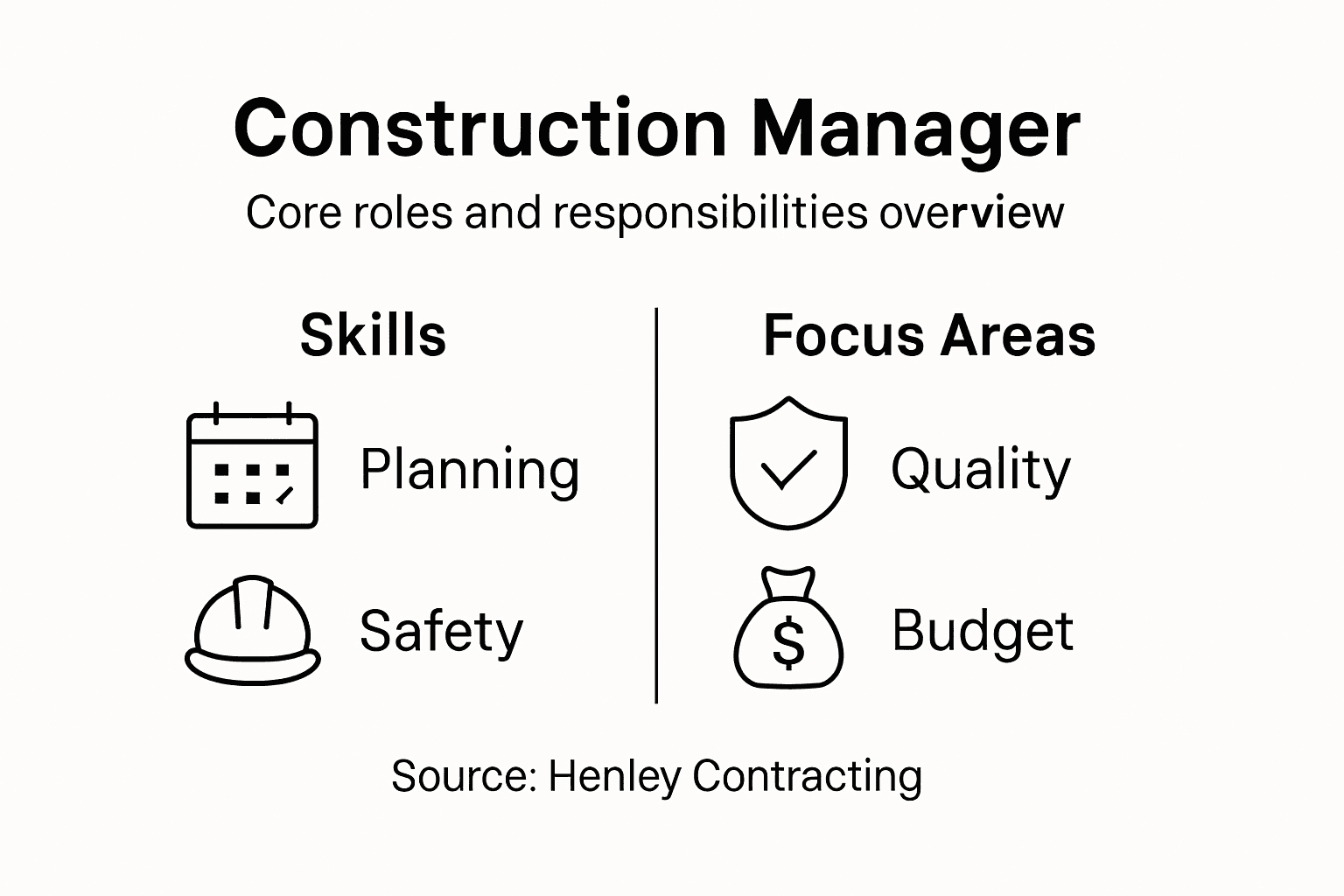
Budget management begins long before work starts. Your construction manager prepares thorough cost estimates, often breaking them into line items so you understand the cost of framing, electrical, plumbing, finishes, and contingencies separately. As work progresses, they track actual spending against the estimate, flagging overruns quickly rather than discovering budget problems at project completion. When a subcontractor’s invoice comes in higher than estimated, your manager addresses it immediately—negotiating, finding alternatives, or determining whether a change order is necessary. The contingency fund (typically ten to fifteen percent of the project budget) acts as a safety net for unforeseen conditions, but a skilled manager minimises how much of that contingency gets used through careful planning and proactive problem-solving. Timelines work similarly. Your manager develops a schedule that respects seasonal constraints (you cannot pour concrete in December in Durham), sequences trades logically (electrical cannot happen before framing), and builds in realistic timeframes for inspections and permitting. As work progresses, they adjust when delays occur, communicating changes to you so surprises don’t derail your plans.
Quality control requires vigilance throughout construction. Your manager inspects work at every phase, comparing it against specifications and building codes. They catch problems early when corrections remain affordable. A framing error discovered during rough framing costs a fraction of what it costs to fix after drywall installation. They verify that subcontractors use specified materials and methods. They ensure inspections happen when required and that the inspector signs off before work proceeds to the next phase. Managing budgets, maintaining project timelines, and ensuring quality standards requires systematic attention. Many construction managers now use project management software to track schedules, budgets, and quality metrics in real time, providing you visibility into progress and allowing them to identify problems before they cascade.
Balancing these three elements means making trade-off decisions. When an unexpected structural discovery requires extra work, your manager presents options: absorb the cost within budget, extend the timeline, reduce scope elsewhere, or increase the budget with your approval. They don’t make these decisions unilaterally. They present the situation clearly, explain the options and their implications, and let you decide. This transparency separates professional managers from those who simply let costs drift upward or timelines slip without explanation.
Key factors to balance during a residential construction project:
| Element | Why It Matters | Monitoring Approach |
|---|---|---|
| Quality | Prevent rework, meets code | Site inspections, checklists |
| Budget | Avoid financial overruns | Line-item tracking, updates |
| Timelines | Reduce inconvenience | Gantt charts, milestones |
Pro tip: Request weekly budget and schedule reports from your manager—this real-time visibility allows you to spot trends early and make informed decisions before small overruns become major problems.
Common Pitfalls and How to Avoid Them
Construction projects fail not because of bad luck but because of predictable mistakes. Understanding these pitfalls before they derail your Durham region renovation helps you hire the right manager and hold them accountable. Inadequate planning, poor communication, scope creep, budget overruns, and failure to adhere to safety standards represent the most common problems that plague residential construction. When you see these patterns emerging on your project, you know something needs to change. Scope creep happens insidiously. You approve a kitchen renovation, then decide to also upgrade the adjacent hallway, then add new lighting throughout, then reconsider the backsplash. Each change feels small individually, but collectively they inflate costs and timelines significantly. A construction manager prevents this by establishing clear project boundaries upfront and requiring formal change orders when you want to add work beyond the original scope. Every change order should specify the cost impact and timeline impact so you make informed decisions.
Poor communication creates misunderstandings that become expensive problems. You assume the manager will update you weekly. They assume you only want contact when problems arise. You envision a certain tile finish. The subcontractor installs something different. These gaps happen because expectations never aligned explicitly. A strong construction manager establishes communication protocols from the beginning—regular meetings, phone check-ins, site visit access for you, and written documentation of decisions. They clarify specifications in writing, not just verbally. They take photos at key phases so you can see progress even when you cannot visit the site. Budget overruns frequently stem from inadequate initial planning. When a manager provides only a rough estimate without detailed breakdowns, you cannot understand where money is going. Hidden costs emerge midway through the project. The solution involves demanding comprehensive planning upfront. Your manager should provide itemised estimates, explain how they calculated numbers, and identify which costs carry uncertainty.
Labour availability and cost pressures present real challenges in Canadian construction. Skilled labour shortages and rising costs present risks for project delays and increased budgets. Your construction manager cannot eliminate these broader market forces, but they can anticipate them. A manager aware of current labour market conditions in the Durham region books key trades months in advance rather than waiting until work is ready. They maintain relationships with reliable subcontractors, reducing the risk of late cancellations or quality problems from unfamiliar trades. They build realistic contingencies into budgets and timelines rather than optimistic estimates that ignore market realities.
Scope creep, poor communication, budget problems, and labour challenges all share a common root cause: inadequate upfront planning and unclear documentation. Projects that start with vague understandings of cost, timeline, and specifications invite problems. Projects that begin with detailed specifications, written timelines, comprehensive budgets, and clear communication protocols prevent most pitfalls before they occur. When evaluating potential managers, examine how thoroughly they plan. Do they ask detailed questions about your vision? Do they provide written specifications and estimates? Do they discuss potential risks and how they’ll mitigate them? Their approach to planning reveals their approach to problem prevention.
Pro tip: Require your construction manager to provide a written project scope document signed by all parties before work begins—this single document prevents more disputes than any other safeguard by ensuring everyone shares identical expectations.
Take Control of Your Quality Build with Expert Construction Management
Ensuring quality, managing budgets, and keeping timelines on track are the top concerns when undertaking a residential project in Durham or surrounding areas. The article highlights the crucial role of a construction manager in coordinating every detail from start to finish while navigating legal responsibilities and complex scheduling. If you want to avoid costly delays, miscommunications, and budget overruns, partnering with an experienced team that understands these challenges will bring peace of mind.

Henley Contracting offers trusted expertise in Custom Build and Engineering services tailored for homeowners seeking quality craftsmanship across Pickering, Whitby, Ajax, and beyond. With over 30 years serving Ontario communities and a solid commitment to clear communication, safety compliance, and precise project management, we transform your vision into a reliable and beautiful reality. Visit Henley Contracting today to secure your construction manager who balances every aspect of your build with professionalism and dedication.
Frequently Asked Questions
What are the main responsibilities of a construction manager?
A construction manager is responsible for planning, organizing, directing, and evaluating the entire construction project. This includes coordinating with architects and engineers, managing subcontractors, ensuring quality control, tracking budgets, and adhering to timelines.
How does a construction manager ensure quality throughout a project?
A construction manager ensures quality by conducting inspections at various phases of construction, addressing issues promptly, and guaranteeing that all work meets building codes and safety standards. They also maintain clear communication with all parties involved to ensure everyone stays aligned with project specifications.
What qualities should I look for in a construction manager?
When selecting a construction manager, look for strong leadership skills, excellent communication abilities, problem-solving capability, technical knowledge of construction methods, and financial acumen to manage budgets effectively.
How can a construction manager manage project timelines effectively?
A construction manager can manage timelines by creating realistic schedules that account for seasonal constraints and the logical flow of trades. They must also continuously track progress and adjust plans when delays occur, ensuring timely communication with the homeowner regarding any changes.