

Interior Renovations: Key Steps for Ontario Homeowners
Choosing between a modern kitchen layout or a durable basement finish can feel overwhelming for Durham Region homeowners ready to transform their space. Interior renovations do more than refresh a room—they can improve daily comfort, enhance energy efficiency, and increase your home’s value, as Canadian government sources explain. This guide helps you understand the real impact of each renovation option and prepares you to make smart design and contractor decisions for a successful project.
Table of Contents
- What Interior Renovations Mean For Homes
- Types Of Renovation Projects Explained
- Planning And Design Choices To Consider
- Ontario Renovation Permits And Regulations
- Budgeting And Common Financial Pitfalls
Key Takeaways
| Point | Details |
|---|---|
| Understanding Renovation Types | Distinguish between lifestyle, retrofit, and maintenance renovations to prioritise your project effectively. |
| Planning and Goal Setting | Clearly define renovation goals to guide design choices and budget planning. |
| Permits and Regulations | Obtain necessary permits to avoid complications during and after the renovation process. |
| Budgeting Wisely | Incorporate a contingency fund and detailed estimates to prepare for unexpected costs. |
What Interior Renovations Mean for Homes
Interior renovations extend far beyond slapping fresh paint on walls or replacing old cabinets. When you renovate the interior of your home, you’re making deliberate improvements that touch multiple aspects of how your space functions and feels. According to government guidance on home renovations, these projects aim to enhance comfort, personalize your space, update aesthetics, improve energy efficiency, or increase your home’s market value. For Durham Region homeowners specifically, understanding what renovations actually accomplish helps clarify whether a project makes sense for your situation.
There are three main categories of interior renovations worth distinguishing. Lifestyle renovations focus on improving how you live day to day, such as upgrading your kitchen layout or modernising your bathroom fixtures to match your evolving needs. Retrofit projects tackle the structural or mechanical systems behind the walls: upgrading insulation, replacing HVAC components, or installing new electrical systems that serve the home’s skeleton. Then there’s maintenance and repair work, which keeps existing systems functioning properly and prevents costly deterioration. Most homeowners mix these categories together. You might be updating your kitchen for lifestyle reasons while simultaneously upgrading the plumbing infrastructure beneath the countertops. The key is recognizing what each type accomplishes so you can prioritize your budget effectively and understand the real return you’ll see from your investment.
The transformation that renovations create often surprises homeowners who haven’t considered the full scope of their project. A kitchen renovation doesn’t just mean new countertops and appliances; it reshapes how your family gathers, entertains, and moves through the home. A basement renovation converts unused square footage into functional living space, directly affecting your home’s usable footprint and resale appeal. As you explore your options, understanding different types of residential renovations will help you see the real possibilities for your space and align them with your actual goals rather than simply copying what you’ve seen on television.
What makes interior renovations particularly valuable for Ontario homeowners is their flexibility. You can undertake a modest update focused on one room, or you can orchestrate a complete home transformation. You can prioritise immediate comfort improvements, long-term energy savings, or maximum resale value, depending on your circumstances. The most successful renovations start with honest assessment of what actually needs to change in your home and what will genuinely improve your daily life or your property’s worth.
Pro tip: Before committing to any renovation, write down your three main goals (comfort, aesthetics, or resale value) and be honest about which matters most, as this single exercise prevents scope creep and keeps your budget aligned with your real priorities.
Types of Renovation Projects Explained
Not all renovation projects are created equal, and understanding the differences between them helps you plan more effectively and set realistic expectations for your Durham Region home. Lifestyle renovations are the projects homeowners typically picture first: updating your kitchen layout, modernising your bathroom, finishing a basement into a recreation space, or converting a spare bedroom into a home office. These renovations focus on how you actually live in your home day to day, improving comfort, functionality, and the way you move through your spaces. They’re often the most visible and personally satisfying because you experience the improvements constantly.
Retrofit projects tackle the mechanical and structural systems that most homeowners never think about until something breaks. These include upgrading insulation for better energy efficiency, replacing outdated HVAC systems, installing new electrical wiring to handle modern power demands, or updating plumbing infrastructure. Retrofits often require permits and inspections to ensure they meet current building codes and safety standards. Many Durham Region homeowners combine retrofit work with lifestyle renovations, for example, upgrading kitchen cabinets while simultaneously replacing the plumbing behind them. This approach maximises efficiency and reduces the disruption of having contractors in your home multiple times.

Maintenance and repair work keeps your home functioning properly and prevents small problems from becoming expensive disasters. Fixing a leaking roof, replacing worn flooring, repairing drywall damage, or updating weatherstripping all fall into this category. The distinction matters because maintenance work is sometimes covered differently by insurance or financed differently than discretionary renovations. Most successful renovation projects blend these three types. You might focus on a lifestyle upgrade like a bathroom renovation while ensuring the underlying plumbing and electrical systems meet current standards, plus addressing any water damage or deterioration you discover during the project.
Understanding these categories helps you communicate clearly with contractors and make informed decisions about scope and budget. A lifestyle renovation might be optional timing-wise, but a retrofit addressing significant energy loss or a repair addressing structural damage might require more urgent attention. When you start planning your project, categorising what you want to accomplish into these buckets prevents confusion and helps contractors provide accurate quotes and timelines.
Here’s a summary of the key differences between the main types of interior renovations:
| Renovation Type | Typical Focus | Level of Disruption | Long-Term Impact |
|---|---|---|---|
| Lifestyle | Daily comfort, layout | Moderate; often visible changes | Increased enjoyment, personalisation |
| Retrofit | Systems, efficiency | Higher; affects structural/mechanicals | Lower energy bills, safer systems |
| Maintenance | Repairs, upkeep | Variable; emergency fixes or planned | Prevents costly damage, maintains value |
Pro tip: Create a separate list for each renovation type (lifestyle, retrofit, maintenance) and prioritise within each category, as this clarity helps contractors sequence work efficiently and prevents you from underestimating hidden issues.
Planning and Design Choices to Consider
Planning is where renovation projects succeed or fail, and spending time on this phase prevents costly mistakes and frustration later. Start by writing down your renovation goals with brutal honesty. Are you renovating to improve your daily comfort, increase your home’s resale value, update the aesthetics, or address a specific problem like poor energy efficiency? Most homeowners have multiple goals, but being clear about which matters most helps you make design decisions that align with your priorities. For example, if maximizing resale value is your primary goal, you might choose neutral colours and classic finishes over trendy design choices that appeal to your personal taste but might turn off future buyers. Creating a detailed list of renovation goals also helps contractors understand exactly what you want, resulting in more accurate quotes and fewer scope creep situations.
Once you know your goals, develop two lists: must-haves and nice-to-haves. Your must-haves are non-negotiable improvements that directly address your primary goals. Nice-to-haves are desirable upgrades that would be great but aren’t essential if budget constraints force cuts. This distinction prevents you from spreading your budget too thin across too many features. In a kitchen renovation, for instance, new cabinets and countertops might be must-haves if you’re upgrading for daily functionality, but a wine fridge or premium backsplash could move to the nice-to-have category. Include the needs of everyone in your household in your planning. A family with young children might prioritize durable, easy-to-clean surfaces, while empty nesters might focus on entertaining spaces or accessibility features for aging in place.
Consider how your renovation will function seasonally and in the future. Will your basement finishing plan account for potential flooding in spring? Does your kitchen layout make sense for how you actually cook and entertain, not just how magazine kitchens look? Thinking through the practical realities of Durham Region weather and your household’s actual behaviour prevents buyer’s remorse and design choices that look beautiful but don’t work. Budget planning deserves equal attention to aesthetic planning. Set a realistic total budget, then add a contingency fund of 10 to 20 percent for unexpected issues like hidden water damage, outdated wiring, or code compliance upgrades discovered once work begins. Most renovation projects uncover surprises, and having financial breathing room prevents these discoveries from derailing your entire project.
Pro tip: Document your planning process by photographing your current space, creating a mood board of colours and finishes you love, and taking measurements of key dimensions, as contractors use this information to provide accurate timelines and identify potential challenges before work starts.
Ontario Renovation Permits and Regulations
Permits and building codes exist for a reason, though many homeowners wish they didn’t. They protect your safety, your home’s structural integrity, and your ability to sell it later without complications. Ontario’s regulatory framework operates through a partnership between the province and municipalities. The province sets the Building Code standards that govern safety, accessibility, and construction practices, while your local municipality (in Durham Region’s case, municipalities like Oshawa, Ajax, Pickering, or Whitby) enforces those standards through permits, inspections, and compliance oversight. When you obtain a building permit before starting renovation work, you’re essentially saying that your project meets these provincial standards and will be inspected to confirm it.
Which renovations actually require permits varies by project type and scope. Generally, any structural changes, mechanical system upgrades, electrical work, or plumbing modifications require permits. A simple interior paint job or cabinet replacement typically doesn’t. However, when you combine projects, permit requirements often trigger. Renovating a bathroom might require permits because you’re modifying plumbing and potentially electrical systems. Finishing a basement requires permits because you’re adding habitable space, which affects building codes for egress windows, ceiling height, and fire safety. The safest approach is to ask your contractor or contact your municipality’s building department before assuming a project is permit-free. Skipping required permits creates serious problems. You won’t be able to obtain occupancy certificates, your home insurance might be voided if work isn’t properly documented, and selling your home becomes complicated when buyers discover unpermitted work.
The permit application process requires detailed documentation. For interior alterations in residential homes, the City of Toronto and similar Ontario municipalities require architectural or construction drawings showing existing conditions, proposed changes, structural details, mechanical specifications, and compliance with building codes. Many homeowners underestimate how detailed these drawings need to be. Working with a contractor experienced in Ontario renovations ensures your submissions meet requirements and don’t get rejected, wasting weeks in the approval process. Once your permit is approved, inspections happen at key stages: after framing or structural work, after mechanical and electrical rough-ins, and at project completion. These inspections verify that work meets code requirements.
Pro tip: Contact your municipality’s building department and describe your project before finalizing your design, as early clarification about permit requirements and code compliance can prevent expensive design revisions after work has already begun.
Budgeting and Common Financial Pitfalls
Budgeting for a renovation is harder than it looks because you’re estimating costs for work you haven’t seen yet and problems you can’t predict. Start by getting multiple written estimates from contractors who understand your specific project. Don’t rely on ballpark figures or phone quotes. Professional written estimates break down labour, materials, and timelines, giving you a realistic foundation for your budget. Compare estimates carefully, but remember that the cheapest option often means corners will be cut somewhere. Once you have realistic estimates, add a contingency reserve of 10 to 20 percent of your total budget for the inevitable surprises. Water damage behind walls, outdated wiring requiring replacement, or structural issues discovered during demolition aren’t rare. They’re the rule. Contractors expect to find problems in older homes, and homeowners who haven’t budgeted for these discoveries end up either halting work or making rushed, expensive decisions mid-project.
One of the biggest financial pitfalls is making significant changes once work has started. When you’re in the middle of a renovation and suddenly decide you want a different tile, upgrade your fixtures, or add an additional feature, that change order gets expensive fast. Labour costs increase because contractors need to re-schedule their crews, materials cost more when purchased outside the original order, and delays cascade. Decisions made during the planning phase cost a fraction of what the same decisions cost when work is underway. Another trap Durham Region homeowners fall into is underestimating the cost of necessary but invisible work. Upgrading electrical panels to handle modern power demands, replacing corroded plumbing, or adding insulation doesn’t look impressive in finished photos, but these costs are real and necessary. Understanding what financial commitments you’re making protects you from shock when contractors uncover these issues.
Payment timing affects your financial risk significantly. Never pay the full cost upfront or pay heavily before work begins. Reputable contractors typically ask for a deposit to cover initial materials and mobilization, then draw payments tied to project milestones. Final payment should always be held until work is substantially complete and all inspections pass. This structure protects you by ensuring contractors stay motivated to finish properly. Get everything in writing, including what happens if the project takes longer than estimated or if costs increase beyond the contingency amount. Vague contracts lead to disputes and unexpected bills. When comparing contractor quotes, ensure you’re comparing identical scopes of work. One contractor might include permits and inspections in their estimate while another doesn’t. Missing details like these create apples-to-oranges comparisons.
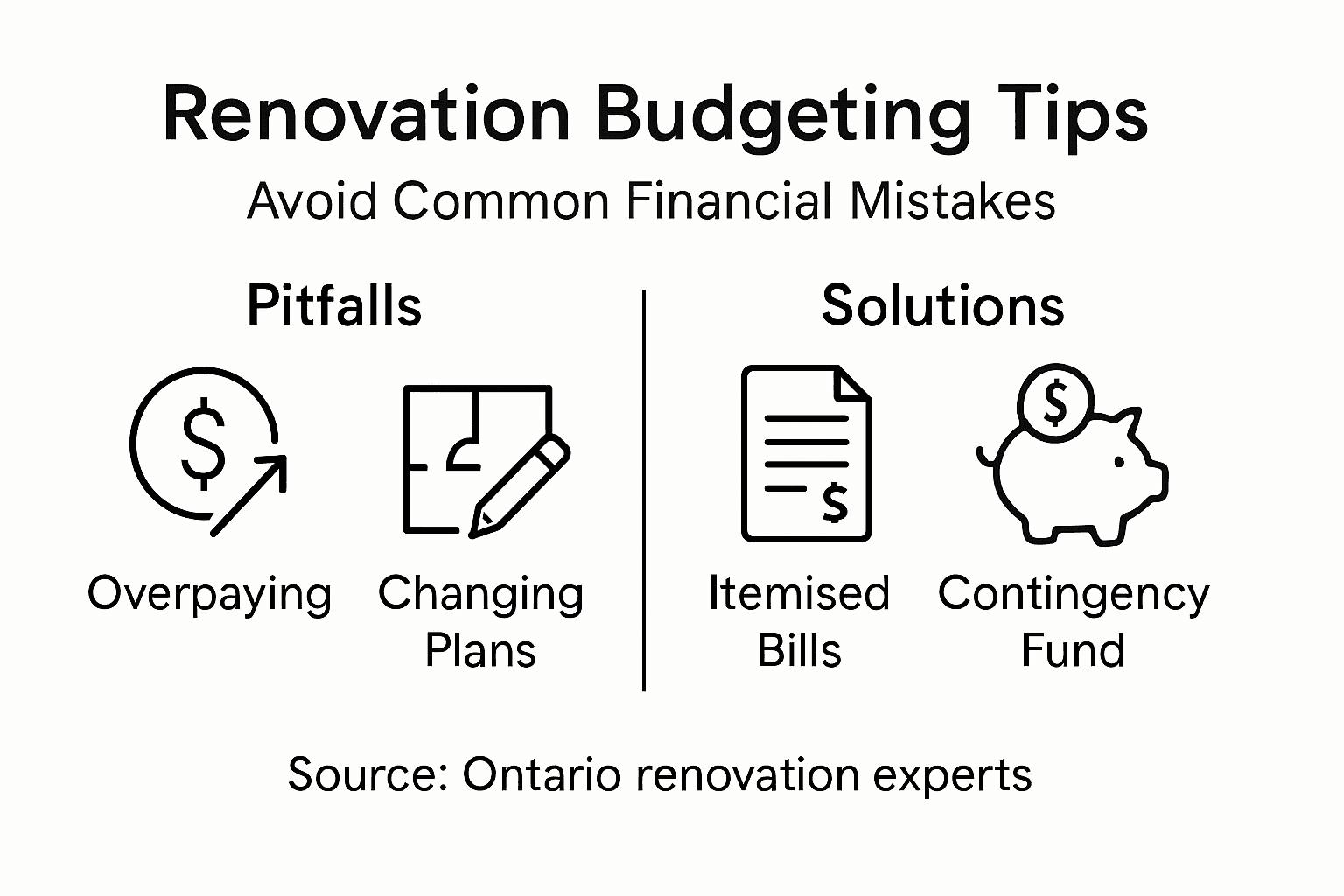
Here are common financial pitfalls in renovations and strategies to avoid them:
| Pitfall | Why It Occurs | How to Avoid |
|---|---|---|
| Underestimating costs | Hidden issues discovered | Add 10–20% contingency |
| Changing scope mid-way | Decisions made too late | Finalise plans before starting |
| Vague contracts | Lack of details or clarity | Demand itemised written agreements |
Pro tip: Request itemised invoices that break down labour, materials, and other costs, as this transparency makes it easier to spot overcharges and helps you understand where your money is actually going throughout the project.
Transform Your Ontario Home with Expert Interior Renovations
Facing the challenge of balancing lifestyle needs, retrofit upgrades, and essential maintenance can feel overwhelming. This article highlighted the importance of clear renovation goals and honest planning to avoid costly surprises and ensure your interior updates truly enhance comfort, efficiency, and value. If you are ready to take the next step in your renovation journey, trust a partner who understands the unique demands of Ontario homes.
Henley Contracting has proudly served Durham Region and surrounding communities since 1989 with expert craftsmanship tailored to your specific renovation goals. Whether you are considering a kitchen makeover for everyday comfort, a basement transformation to add functional living space, or critical system upgrades that must meet Ontario’s strict permit and code requirements, our team guides you through every phase with transparency and skill.

Start your renovation with confidence by exploring our Renovations services. Discover how we blend lifestyle enhancements with essential retrofits to maximise your home’s value and comfort. Visit our homepage to learn more about our commitment to quality and customer satisfaction. Ready to discuss your project? Contact Henley Contracting today to schedule a consultation and turn your renovation plans into reality.
Frequently Asked Questions
What are the main types of interior renovations?
The main types of interior renovations include lifestyle renovations, which focus on daily comfort and functionality; retrofit projects, which address structural and mechanical systems; and maintenance and repair work, which ensures existing systems are functioning properly.
How do I create a renovation budget?
Start by obtaining multiple written estimates from contractors. Add a contingency reserve of 10 to 20 percent for unexpected costs. It’s crucial to plan for hidden issues like outdated electrical or plumbing systems as these can significantly impact your budget.
What should I include in my renovation plan?
Include a clear list of your main goals, such as improving comfort, increasing resale value, or updating aesthetics. Additionally, create lists of must-haves versus nice-to-haves to help prioritize your project effectively.
Do I need permits for my renovation projects?
Yes, many renovations that involve structural changes, mechanical system upgrades, or electrical work typically require permits. It’s best to check with your local building department to ensure compliance with regulations.